Key Takeaways
- Florida weather can affect wood, vinyl, aluminum, chain-link, and composite fencing in different ways.
- Wood offers a natural appearance and flexible design options, but it requires regular maintenance.
- Vinyl is a popular low-maintenance choice for privacy fencing.
- Aluminum works well for pool areas, open views, and properties where rust resistance matters.
- Fence design, post installation, gates, local rules, and property conditions matter as much as the material itself.
- The best option is usually the material and layout that balance privacy, maintenance expectations, durability, and the way the property is used.
Choosing a fence for a Florida property involves more than picking a color or style. Homeowners comparing residential and commercial fences should begin with the conditions the fence will face, including intense sun, humidity, heavy rain, coastal salt exposure, insects, and seasonal wind.
The right material also depends on the fence’s purpose. A backyard privacy barrier, a pool enclosure, a pet fence, and a decorative front-yard border can have very different design, maintenance, and safety needs.
It is also important to think about how the fence will be used over time. A homeowner may initially need a simple boundary marker, but later want room for landscaping, a wider gate for lawn equipment, or a safer enclosed area for children or pets. Considering those practical details before installation can help avoid costly modifications later.
Why Florida Requires a Different Fence Plan
Florida fences must contend with more than ordinary daily wear. Persistent moisture can encourage wood deterioration when materials are not properly protected, while strong sunlight can fade finishes and dry exposed surfaces. Coastal properties may also need corrosion-resistant hardware because salt in the air can affect metal components over time.
Drainage should be considered at the same time as material selection. Water that regularly pools along a fence line can keep posts and lower rails damp, contribute to soil movement, and make routine cleaning more difficult. A fence should not block an established drainage path, and the finished grade around posts should direct standing water away where practical.
Wind exposure deserves equal attention. A tall, solid privacy fence catches more wind than an open picket, aluminum, or chain-link design. Posts, rails, fasteners, gate framing, and footing depth should all suit the site and the proposed fence height. Before finalizing a plan, review applicable Florida Building Code resources and confirm local requirements with the city or county building department.
Properties near open water, on large cleared lots, or at the edge of a neighborhood may receive stronger wind than a sheltered backyard surrounded by homes and mature trees. In those settings, the spacing and construction of fence panels can be just as important as the material selected.
Start With the Main Job of the Fence
A fence can solve several problems, but identifying the primary goal helps narrow the choices quickly.
- Privacy: Solid panels can reduce views into a backyard or along a busy road.
- Pet control: A secure layout with properly sized openings and dependable gates can help contain pets.
- Pool safety: Pool barriers must be planned around safety rules, access points, and gate hardware.
- Property definition: Open fencing can mark a boundary without closing off views.
- Curb appeal: A decorative fence can complement landscaping and the home’s architecture.
When a fence has more than one job, rank those priorities. For example, a family may want privacy around a patio but also need clear sightlines around a pool. Combining materials or using different fence styles in separate parts of the property can sometimes provide a more practical result than using one design everywhere.
Wood Fencing: Warm, Flexible, and High Maintenance
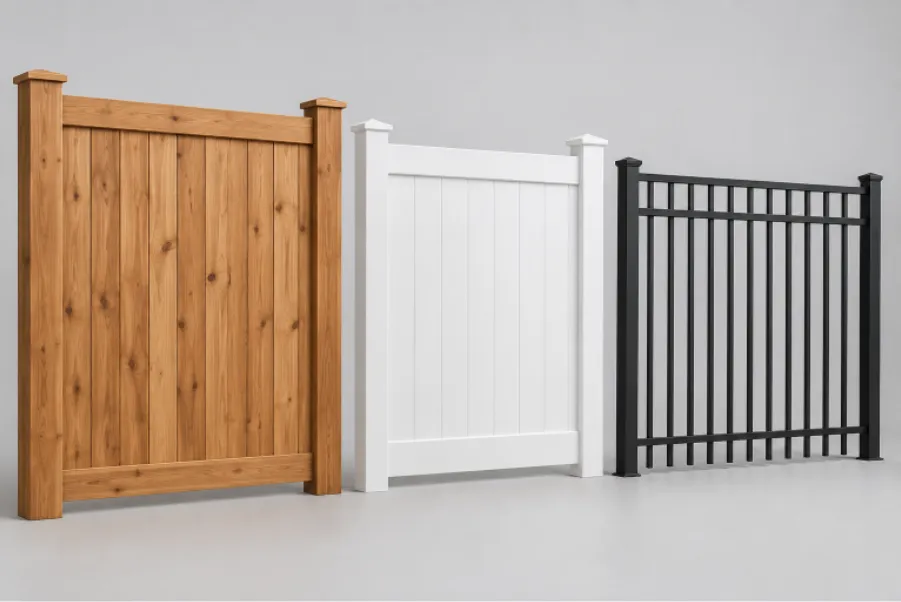
Wood remains a practical option for homeowners who want a traditional picket fence, a custom privacy fence, or a natural-looking garden border. It can be painted or stained, and individual boards can often be replaced when damaged.
The tradeoff is ongoing care. Wood can absorb moisture, and constant exposure to sun and rain may lead to fading, checking, warping, or rot without regular cleaning and protective finishing. The lower portion of the fence and the posts deserve particular attention because they remain close to damp soil. Wood can be an excellent fit when a homeowner is willing to maintain it consistently.
Design choices can affect how easily a wood fence is maintained. Leaving appropriate clearance from soil and dense plant growth can help reduce prolonged moisture contact, while keeping sprinklers from repeatedly soaking the fence can limit unnecessary water exposure. Homeowners should also inspect boards, rails, and gate connections periodically so small repairs can be addressed before they affect larger sections.
Vinyl Fencing: Low Upkeep With Strong Privacy Options
Vinyl fencing is often chosen for clean lines, consistent color, and reduced routine maintenance. It does not require the painting or staining associated with wood, and it resists rot and many insect-related concerns. Privacy, semi-private, and picket-style systems are widely available.
Not all vinyl systems are alike. Ask how posts and gates are reinforced, whether replacement parts will be available, and how the system is intended to perform in the property’s sun and wind exposure. Solid vinyl panels provide privacy, but their broad surfaces can also receive substantial wind pressure. Quality installation is essential.
Routine vinyl care commonly involves washing away dirt, mildew, grass clippings, and landscape residue. Before using a cleaner, follow the fence manufacturer’s instructions, especially when the fence is located near plants, painted surfaces, or a pool deck. A vinyl fence can look consistent for years, but damaged sections may require matching replacement components rather than a simple spot repair.
Aluminum Fencing: A Clean Choice for Pools and Open Views
Aluminum fencing is well suited to pool areas, front-yard borders, sloped yards, and homes that need visibility rather than full privacy. Its open design allows airflow, and its finished surface generally requires less upkeep than a painted wood fence.
It offers little privacy on its own, although landscaping can soften views through the rails. Pool projects require especially careful planning. Florida’s pool barrier requirements address matters such as barrier height, openings, placement, and self-closing, self-latching access gates. Confirm the current local interpretation before installation.
Because aluminum fence panels are open, they can preserve views of gardens, water features, and common areas while still creating a clearly defined boundary. On uneven terrain, select a system designed to follow or step with the slope so that gaps below the fence do not create a problem for pets, children, or pool-barrier compliance.
Chain-Link and Composite Options
Chain-link fencing is a functional choice for pet areas, side yards, utility spaces, and larger properties where budget and airflow are priorities. Privacy slats or plantings can add screening, but they may also change the fence’s wind exposure.
For chain-link systems, homeowners should compare the coating, framework, mesh gauge, terminal posts, and gate hardware rather than focusing only on the appearance of the mesh. Galvanized or coated components can be useful where moisture exposure is frequent, and a properly tensioned fence helps maintain a neat, secure enclosure.
Composite and other specialty fence products can provide a modern appearance with less routine upkeep than wood. Before choosing one, review the manufacturer’s guidance on heat exposure, color retention, repair methods, replacement panels, and compatible hardware. Appearance alone does not reveal how easily a fence can be maintained or repaired.
Compare Materials by Priorities
- Choose wood for natural character, custom layouts, and projects where regular upkeep is acceptable.
- Choose vinyl for low-maintenance privacy and a uniform finished appearance.
- Choose aluminum for pools, decorative boundaries, gentle slopes, and open sightlines.
- Choose chain-link for practical containment, airflow, and long fence runs.
- Choose composite for contemporary styling when product availability and repair options meet the project’s needs.
Also compare the material at the gate, corner, and end posts—not only in the main fence panels. Those locations receive repeated movement or carry additional load, particularly when a gate is wide or frequently used. Strong hardware and appropriate reinforcement can make a meaningful difference in day-to-day performance.
Match the Fence to the Property
Coastal homes benefit from attention to corrosion-resistant finishes and hardware. Inland suburban properties may place greater emphasis on privacy, drainage, lot layout, and neighborhood appearance. On large or rural lots, total linear footage, gate access, terrain, animal needs, and maintenance equipment access can influence the most sensible design.
Landscaping should be part of the layout discussion. Trees, roots, hedges, irrigation lines, outdoor lighting, air-conditioning equipment, and utility meters can all affect post placement and access. Planning a small maintenance path where appropriate may make it easier to mow, trim vegetation, clean the fence, and reach service areas without disturbing the finished installation.
Regardless of location, verify the property line before construction. Review easements, drainage areas, utilities, HOA restrictions, permit rules, and any limits on height, color, or fence placement. A survey or reliable property record can help prevent an expensive boundary dispute.
Build a Realistic Budget
Material price is only one part of the project cost. Compare estimates using the same fence length, height, style, number of gates, demolition needs, site access, terrain, posts, hardware, permits, cleanup, and disposal. Ask whether the quote includes all gate components and whether maintenance guidance or warranty terms are provided in writing.
It is helpful to clarify what happens if the installer encounters buried debris, roots, rock, irrigation components, or an unexpected grade change. These conditions can affect labor and scheduling. A detailed written scope makes it easier to compare proposals fairly and understand whether staining, painting, landscaping restoration, or removal of an old fence is included.
Make the Final Decision
The best Florida fence is the one that matches the property’s purpose and conditions. Define the goal, evaluate sun, drainage, wind, and salt exposure, choose the desired privacy level, confirm rules, and compare complete installation scopes. A thoughtful choice of material and design can create a fence that supports safety, appearance, and long-term use.
Before making the final commitment, walk the proposed fence line and picture how people, pets, vehicles, and maintenance tools will move through the space. Confirm gate swing direction, latch placement, access to utility areas, and the relationship between the fence and nearby landscaping. Taking time to resolve these details early can help the completed fence look intentional and function well in Florida conditions.


