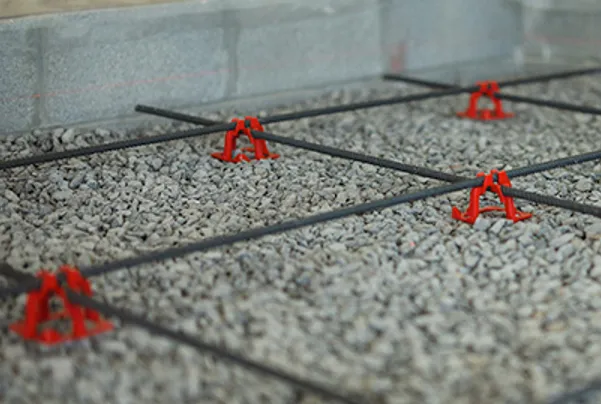
Understanding the Role of Concrete Construction Accessories
When we embark on a concrete construction project, our primary goal is to create a structure that is not only robust but also durable for decades to come. While the concrete mix itself is crucial, the often-overlooked heroes are the accessories that ensure the reinforcement system performs as intended. These components are essential for achieving proper load distribution, maintaining the correct slab depth, preventing corrosion of rebar, ensuring adequate concrete coverage, and ultimately, guaranteeing structural stability.
Consider a concrete slab or wall: its strength comes from the composite action of concrete and steel reinforcement. Without proper positioning, the steel cannot effectively carry the tensile stresses that concrete alone cannot withstand. This is where accessories like rebar chairs, spacers, and bolsters come into play, meticulously holding the rebar grid in its designated position before and during the concrete pour.
Primary Functions of Concrete Construction Accessories
The functions of these accessories extend beyond simple support; they are integral to the engineering performance of the entire concrete element.
- Elevation Control: Perhaps the most critical function is precise elevation control. Rebar must be lifted off the subgrade or formwork to ensure it is fully encapsulated within the concrete. This provides the necessary concrete cover, which protects the steel from environmental factors and helps achieve the designed structural capacity.
- Tensile Strength Enhancement: By maintaining the rebar’s position, these accessories allow the steel to effectively resist tensile forces. If rebar sags or shifts, its ability to engage with the concrete and contribute to the composite strength is severely compromised, leading to potential failure under load.
- Structural Reinforcement Integrity: Accessories ensure the entire rebar cage or grid maintains its intended geometry. This means bars are correctly spaced and aligned, allowing for uniform stress distribution throughout the concrete element.
- Thermal Cracking Mitigation: While not a direct function, proper rebar placement, facilitated by chairs and spacers, contributes to the overall structural integrity that helps manage thermal expansion and contraction. When rebar is correctly positioned, it helps distribute stresses more evenly, reducing the likelihood of uncontrolled thermal cracking.
Choosing Compatible Concrete Construction Accessories for Job Sites
Selecting the right rebar chair or support for a project involves careful consideration of several factors to ensure compatibility and optimal performance.
- Rebar Sizes: Rebar chairs are designed to accommodate specific diameters of rebar. We must always match the chair’s cradle size to the rebar being used, whether it’s #3 (10mm) up to #8 (25mm) or larger. Many chairs offer universal designs that can secure multiple bar sizes, providing flexibility on diverse job sites.
- Multi-Bar Support: For applications where multiple layers or grids of rebar are required, such as in thick slabs or footings, we look for chairs designed to support several bars simultaneously. Some models feature wider cradles or multiple slots to securely hold a rebar mat.
- Heavy-Duty Mesh and Mesh Support Chairs: When working with welded wire mesh, specialized mesh support chairs are available. These are often lower profile and designed with wider bases to prevent punching through vapor barriers or soft subgrades, ensuring the mesh remains at the correct elevation.
- Load Capacity and Stability: The weight of the rebar itself, plus any incidental loads during placement and pouring, dictates the required strength of the chairs. We need supports that can withstand these forces without deforming or collapsing. For robust and reliable options that can handle demanding conditions, exploring resources on strong rebar chairs and concrete supports can provide valuable insights for making informed choices.
Plastic vs. Metal Reinforcement Supports
When selecting reinforcement supports, one of the primary decisions we face is whether to use plastic or metal options. Both serve the same fundamental purpose of elevating and spacing rebar, but they differ significantly in their material properties, advantages, and disadvantages.
Plastic rebar chairs, typically manufactured from durable polypropylene polymers, have become increasingly popular in modern construction. Their key advantage lies in their non-corrosive properties. Unlike metal, plastic will not rust, which is a critical factor in preventing future concrete degradation. Rusting metal chairs can lead to rust stains on the concrete surface or, more critically, contribute to rebar corrosion if the concrete cover is compromised. This rust prevention capability is particularly valuable in environments exposed to moisture, chemicals, or de-icing salts, where the longevity of the concrete structure is paramount.
Metal wire supports, often made from steel wire, have been a traditional choice. They are generally strong and can be easily bent or shaped on-site to suit specific needs. However, their metallic composition means they are susceptible to rust, especially if the concrete cover is insufficient or if they are exposed to moisture over time. This can lead to aesthetic issues like rust spots or, in severe cases, structural concerns due to expansion of rust, causing concrete spalling.
To provide a clearer comparison, let’s examine the key differences:
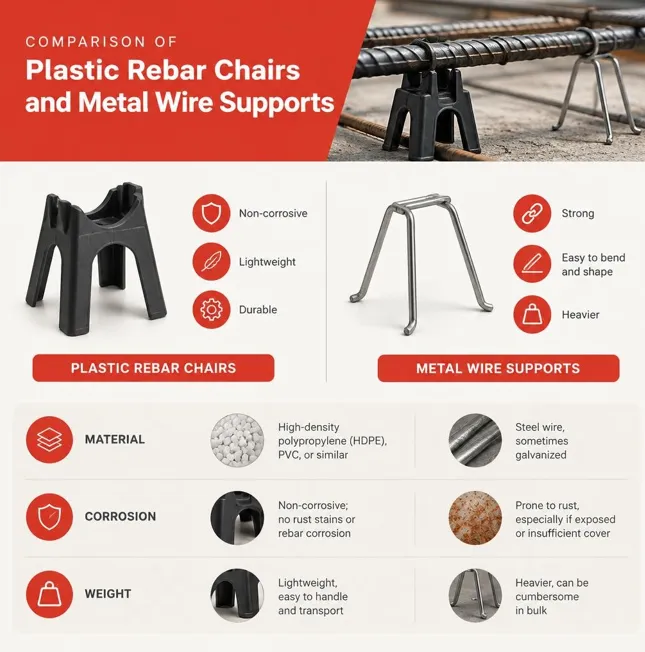
Feature Plastic Rebar Chairs Metal Wire Supports Material High-density polypropylene (HDPE), PVC, or similar Steel wire, sometimes galvanized Corrosion Non-corrosive; no rust stains or rebar corrosion Prone to rust, especially if exposed or insufficient cover Weight Lightweight, easy to handle and transport Heavier, can be cumbersome in bulk Durability Very durable, resistant to chemical degradation Durable, but susceptible to rust-related degradation Cost Generally cost-effective, especially for bulk orders Can be more expensive, depending on gauge and coating Stability Wide bases for excellent stability on various surfaces Can be less stable on soft subgrades; prone to tipping Installation Often feature snap-lock designs for quick placement Can require wire tying; some designs are less intuitive Thermal Bridging Low thermal conductivity, minimal thermal bridging Higher thermal conductivity, potential for thermal bridging Recyclability Often made from recycled plastics; recyclable Recyclable, but rust can complicate the process Structural Profiles and Design Variations
The evolution of rebar chairs has led to a variety of structural profiles and design variations, each tailored for specific applications and ease of use. Understanding these different types allows us to select the most efficient and effective support for any given project.
- Single-Direction Chairs: These are designed to support individual rebar bars running in one direction. They typically have a single cradle or slot at the top to hold the rebar at a specific height. They are ideal for linear applications like footings, beams, or the primary reinforcement layer in slabs.
- Dual-Direction Cradles: Also known as “slab bolsters” or “continuous high chairs,” these supports are designed to hold multiple rebar bars, often forming a grid pattern. They feature a longer, continuous cradle that can accommodate rebar running in two perpendicular directions, making them excellent for supporting rebar mats in slabs, decks, and bridge applications.
- Wide-Base Supports: Many plastic rebar chairs come with wide, flat bases. This design significantly enhances stability, preventing the chair from sinking into soft subgrades, puncturing vapor barriers, or tipping over during rebar placement or concrete pouring. This stability is crucial for maintaining precise rebar elevation.
- Snap-Lock Mechanism: A common and highly beneficial feature in plastic rebar chairs is the snap-lock or clip-on mechanism. This design allows for quick and secure attachment of the rebar to the chair without the need for tie wire. This not only speeds up the installation process but also ensures the rebar remains firmly in place, even during vigorous concrete placement and vibration. Some chairs also incorporate a “rebar lock” feature, providing an even more secure grip.
These design innovations contribute to faster installation times, improved accuracy in rebar positioning, and enhanced overall structural integrity of the concrete element.
Placement Strategies, Load Limits, and Pour Best Practices
Achieving optimal performance from our concrete structures relies heavily on the correct placement and support of rebar. This involves strategic spacing of rebar chairs, understanding their load-bearing capabilities, and adhering to best practices during the concrete pour itself.
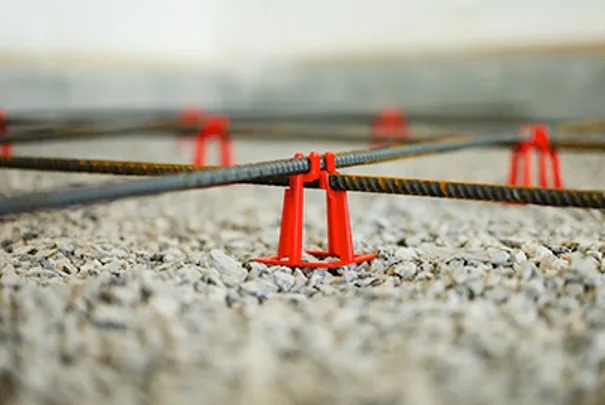
When we lay out our rebar grid, the spacing of the chairs is paramount. Insufficient support can lead to rebar deflection or sagging, which compromises the concrete cover and the structural integrity. As a general rule, rebar chairs should be spaced closely enough to prevent any noticeable sag in the rebar between supports. Best practices often suggest spacing chairs approximately 2 to 4 feet apart, depending on the rebar diameter, the weight of the rebar mat, and the specific project requirements. For lighter gauge rebar or heavier mats, closer spacing may be necessary. The goal is to ensure the rebar remains precisely at its designed elevation and does not shift when workers walk on it or during the dynamic forces of a concrete pour.
High-quality plastic rebar chairs are engineered to withstand significant loads. For instance, some heavy-duty plastic rebar chairs are rated to support a maximum load of up to 1400 lb per package (referencing a 500-piece package, implying substantial individual chair strength). This impressive load capacity means they are robust enough to support not only the weight of the rebar but also the incidental weight of workers who might need to walk across the rebar mat during inspection or before the pour. This “walkability” during the pour is a critical safety and efficiency factor, ensuring the rebar structure remains undisturbed.
During the concrete pour, several best practices ensure the rebar chairs perform their function effectively:
- Vibration Management: While concrete vibrators are essential for eliminating air pockets, we must use them carefully around the rebar and chairs. Excessive or aggressive vibration can dislodge rebar from its supports or even cause chairs to shift, leading to misaligned reinforcement.
- Even Distribution: Concrete should be distributed as evenly as possible to minimize localized pressure on the rebar chairs. Dumping large volumes in one spot can create undue stress and potentially cause chairs to sink or fail.
- Continuous Monitoring: Throughout the pour, we continuously monitor the rebar elevation and chair stability. Any signs of shifting or sagging should be addressed immediately, though with correctly spaced and high-quality chairs, such issues are rare.
Once the concrete is poured and cured, the plastic rebar chairs become a permanent part of the concrete element, undergoing permanent concrete encapsulation. Their non-corrosive nature ensures they do not introduce any future issues within the structure.
Frequently Asked Questions About Concrete Reinforcement Accessories
As we delve deeper into the specifics of concrete construction, several common questions often arise regarding the use and necessity of rebar chairs and other reinforcement accessories. Addressing these concerns helps ensure a clearer understanding of their critical role.
Do plastic rebar chairs remain permanently embedded in cured concrete?
Yes, plastic rebar chairs are designed to remain permanently embedded within the cured concrete. They become an integral, non-structural component of the concrete element. The materials used, typically high-density polypropylene or other non-reactive polymers, are chosen specifically because they are inert and will not degrade or react with the concrete over time. This permanent concrete encapsulation is a key advantage, as it ensures the rebar maintains its proper position for the entire lifespan of the structure. Because they are non-corrosive, unlike some metal alternatives, they do not pose a risk of rust staining or spalling from within the concrete, contributing positively to the long-term structural integrity and aesthetic quality of the finished product.
What happens if rebar supports are omitted during a concrete pour?
Omitting rebar supports or using an insufficient number of them can have severe and detrimental consequences for the structural integrity and longevity of a concrete project.
- Bar Displacement and Sagging: Without adequate support, rebar will inevitably sag under its own weight, especially in larger slabs or beams. During the concrete pour, the weight and pressure of the wet concrete will further push the rebar downwards. This leads to bar displacement, where the rebar ends up resting on the subgrade or formwork, significantly reducing or eliminating the critical concrete cover.
- Compromised Structural Integrity: The primary purpose of rebar is to provide tensile strength. If the rebar is not positioned correctly within the tension zone of the concrete element, it cannot effectively resist pulling forces. This leads to a substantial reduction in the designed structural capacity, making the concrete susceptible to cracking, premature failure, and even catastrophic structural failure under design loads.
- Surface Rust and Concrete Spalling: When rebar sags and comes into direct contact with the ground or is too close to the surface, it becomes vulnerable to moisture and oxygen. This exposure can lead to surface rust. As rust forms, it expands, creating internal pressure that can cause the surrounding concrete to crack and break away, a phenomenon known as concrete spalling. This not only compromises the appearance but also further exposes the rebar to corrosive elements, accelerating degradation.
- Reduced Durability and Lifespan: A concrete structure built without proper rebar support will have a significantly reduced lifespan. It will be more prone to cracking, water infiltration, and structural deterioration, leading to costly repairs or even complete replacement much sooner than anticipated.
How do you determine proper spacing and height for rebar chairs?
Determining the correct spacing and height for rebar chairs is a critical step in ensuring the integrity of a concrete structure. This process involves considering several factors:
- Slab Thickness and Concrete Cover: The specified concrete cover (the distance between the rebar and the surface of the concrete) is paramount. This is dictated by engineering specifications and local building codes, which vary based on the type of structure, exposure conditions, and fire rating requirements. Rebar chairs are manufactured to provide specific heights (e.g., 1 inch, 1.5 inches, 2 inches), and we must select chairs that achieve the required cover for the bottom layer of reinforcement. For multiple layers, taller chairs or specialized bolsters are used.
- Bar Diameter and Weight of Reinforcement: Thicker, heavier rebar will sag more readily than thinner bars. Consequently, larger diameter bars or dense rebar mats require closer spacing of chairs to prevent deflection. We must consider the total weight of the rebar grid the chairs will support.
- Deflection Limits: Engineers design structures with specific deflection limits for reinforcement. The spacing of rebar chairs must be sufficient to keep the rebar within these acceptable deflection tolerances. A common rule of thumb is to space chairs every 2 to 4 feet along the length of the rebar. However, for very heavy rebar or when walking on the mat is anticipated, closer spacing (e.g., 18-24 inches) might be necessary.
- Subgrade or Formwork Condition: On soft subgrades or over vapor barriers, chairs with wider bases are preferred to prevent sinking or puncturing. On rigid formwork, standard chairs are usually sufficient.
- Spacing Calculations: While general guidelines exist, for critical projects, we often refer to engineering drawings or perform specific spacing calculations based on the rebar’s stiffness, the applied loads, and the desired deflection limits. The goal is to create a stable, level plane of reinforcement that will not move during the pour.
Conclusion
In the intricate world of concrete construction, the unsung heroes are often the small but mighty accessories that ensure our structures stand the test of time. As we’ve explored, plastic rebar chairs are indispensable tools, providing the precise elevation and unwavering support necessary for optimal rebar placement. Their non-corrosive properties, ease of use, and robust load capacities make them a superior choice for a vast array of projects, from residential foundations to expansive commercial slabs.
By understanding the distinct advantages of plastic chairs over their metal counterparts, recognizing the critical importance of proper spacing, and adhering to best practices during concrete pours, we can significantly enhance the quality of our reinforcement. Omitting these essential supports or misplacing them can lead to costly structural deficiencies, compromised durability, and a shortened lifespan for our concrete investments.
Investing in quality reinforcement accessories like plastic rebar chairs is an investment in project longevity, structural stability, and overall site efficiency. As construction practices continue to evolve, the emphasis on precision and material integrity remains paramount. By making informed choices about these foundational components, we ensure that every concrete structure we build is not just strong, but truly enduring.