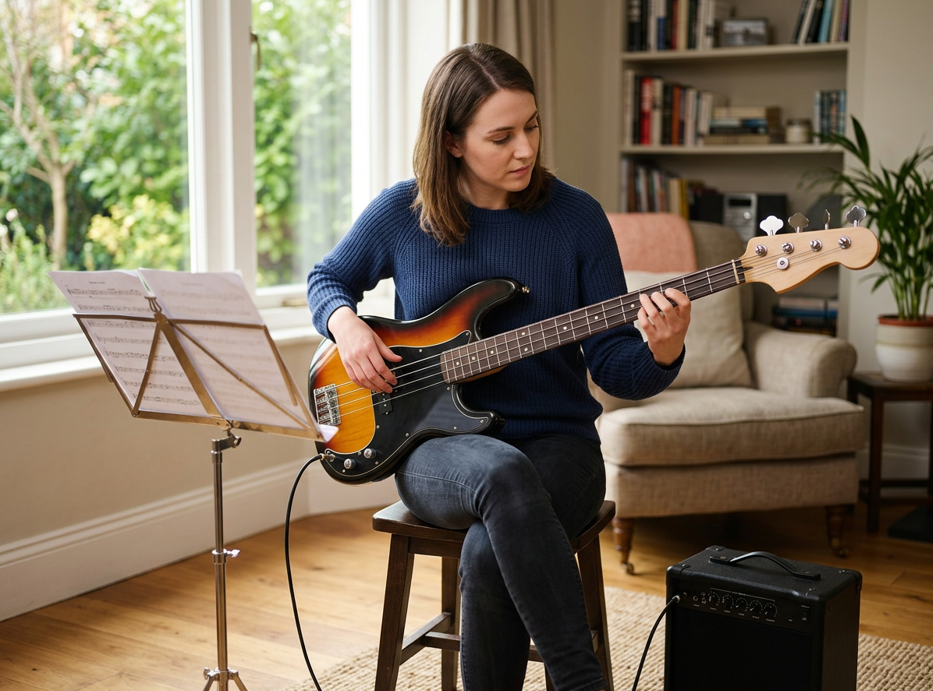
Essential Criteria for a Performance Beginner Bass Guitar
Choosing your first bass guitar is a pivotal step, and focusing on a Performance beginner bass guitar ensures you acquire an instrument that supports your learning journey without hindering progress. This isn’t just about finding any bass; it’s about finding one that feels right, sounds good, and inspires you to play. We consider several ergonomic and structural elements to be crucial for this initial selection.
A well-chosen bass will feature a neck that feels comfortable in your hands, allowing for easy fretting and smooth transitions. Factors like the neck’s profile (thickness and shape) and the fretboard radius (the curvature of the playing surface) significantly impact playability. Beginners often benefit from necks that aren’t overly chunky, promoting a relaxed grip. The action height – the distance between the strings and the frets – should be set low enough for easy pressing without excessive buzzing, a common frustration for new players.
Body balance is another critical consideration. A bass that is well-balanced will sit comfortably against your body, whether you’re sitting or standing, preventing the neck from dipping towards the floor, a phenomenon known as “neck dive.” This allows you to focus on your playing rather than constantly supporting the instrument. Finally, the overall build quality, even at an entry-level, should inspire confidence, ensuring durability and consistent performance. For a deeper dive into what makes a great beginner instrument, including insights into specific models and features, explore resources dedicated to helping you choose your first bass guitar journey.
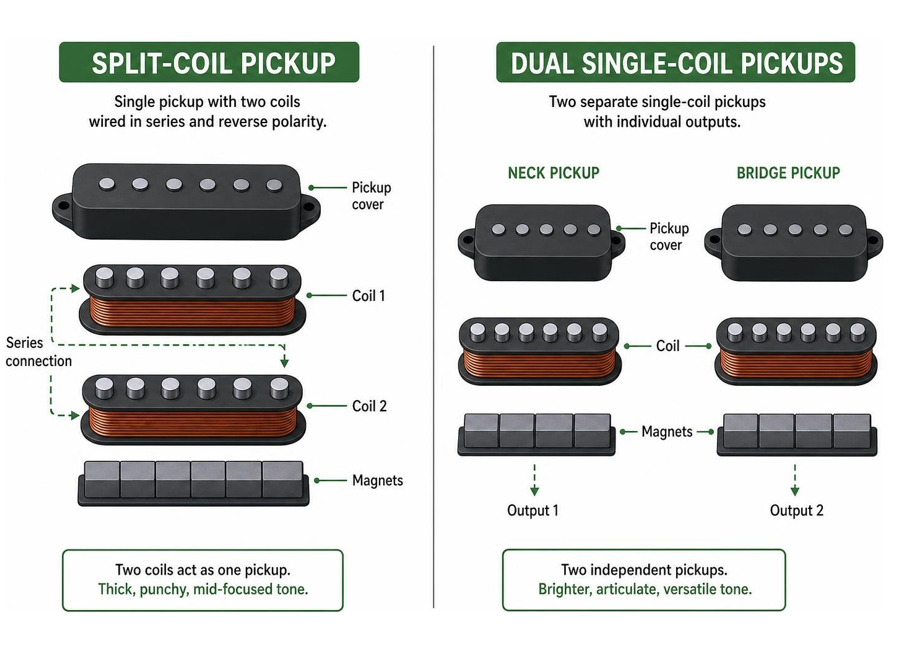
Understanding pickup configurations is also key to shaping your sound. Different types of pickups offer distinct tonal characteristics, influencing the genres you might gravitate towards.
Pickup Type Characteristics Common Genres Split-Coil (P-Style) Punchy, mid-focused, thick, powerful tone Rock, Punk, Blues, Classic Rock Dual Single-Coil (J-Style) Brighter, articulate, versatile, growly Funk, Jazz, R&B, Fusion Humbucker (MM-Style) High output, rich, full, aggressive, defined lows Metal, Hard Rock, Modern Rock, Slap Bass
Selecting the Right Performance Beginner Bass Guitar Body Style and Pickups
The body style and pickup configuration of your bass guitar play a significant role in its feel and sound. For beginners, understanding these differences can help you choose an instrument that aligns with your musical interests.
Pickups are essentially microphones for your strings, converting their vibrations into electrical signals.
- Split-coil pickups, often found on instruments inspired by classic P-Bass designs, are known for their powerful, punchy, and mid-focused tone. They excel in genres where a strong, driving bassline is essential.
- Dual single-coil pickups, common in J-Bass inspired instruments, offer a brighter, more articulate sound with greater tonal versatility. The ability to blend the output of two separate pickups allows for a wide range of tones, from warm and round to sharp and cutting.
- Humbuckers, while less common on traditional beginner models, provide a thick, high-output sound, often favored in rock and metal for their aggressive tone and hum-cancelling properties.
Beyond pickups, consider the body contours of the instrument. Comfortable contours allow the bass to rest naturally against your body, reducing fatigue during longer practice sessions. The tonewoods used in the body and neck also contribute to the instrument’s overall weight and resonance, though for beginners, playability and comfort usually take precedence over subtle tonal nuances of wood. Finally, ensure good fret access across the entire neck, allowing you to reach higher notes without strain.
String Count and Scale Length Considerations
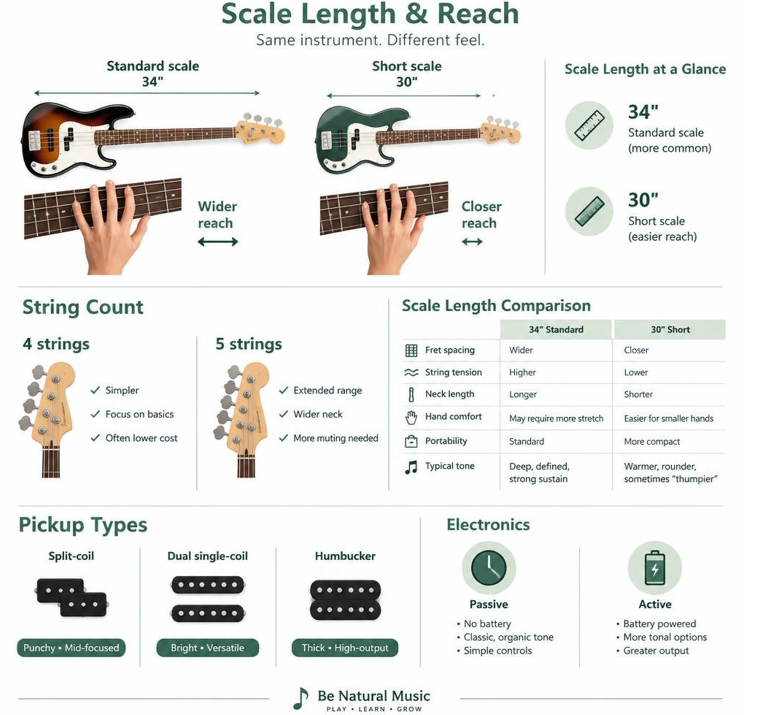
One of the first decisions a beginner faces is the number of strings and the instrument’s scale length. These factors directly impact playability and the range of notes you can access.
String Count:
- 4-string basses are overwhelmingly recommended for beginners. They offer simplicity, focusing your learning on fundamental techniques, rhythm, and harmony without the added complexity of an extra string. Over 60% of beginner bassists reportedly start on a 4-string, appreciating its straightforward nature and often lower cost.
- 5-string basses introduce a low B string, extending the instrument’s range downwards. While this can be appealing for certain genres or advanced players, it adds to the neck’s width and requires more careful muting techniques. We generally advise beginners to master the 4-string before considering a 5-string, unless they have specific musical needs or prior experience with other stringed instruments.
Scale Length: The scale length is the vibrating length of the string, from the nut to the bridge.
- 34-inch standard scale is the most common length for bass guitars. It provides a familiar feel for many players and contributes to the characteristic tension and tone of bass strings.
- 30-inch short-scale basses have seen a surge in popularity, especially among beginners and those with smaller hands. These instruments bring the frets closer together and reduce string tension, making them easier to navigate. They are preferred by 35% of new players, including electric guitarists transitioning to bass, due to their comfortable feel.
Evaluating Electronics in a Performance Beginner Bass Guitar
The electronics within your bass guitar determine its output signal and tonal flexibility. You’ll primarily encounter two types: passive and active.
- Passive basses are simpler, requiring no battery. They rely on the natural output of the pickups, offering a classic, organic tone. Many iconic bass sounds come from passive instruments, known for their warmth and dynamic response. They are often favored for their straightforward controls and reliability.
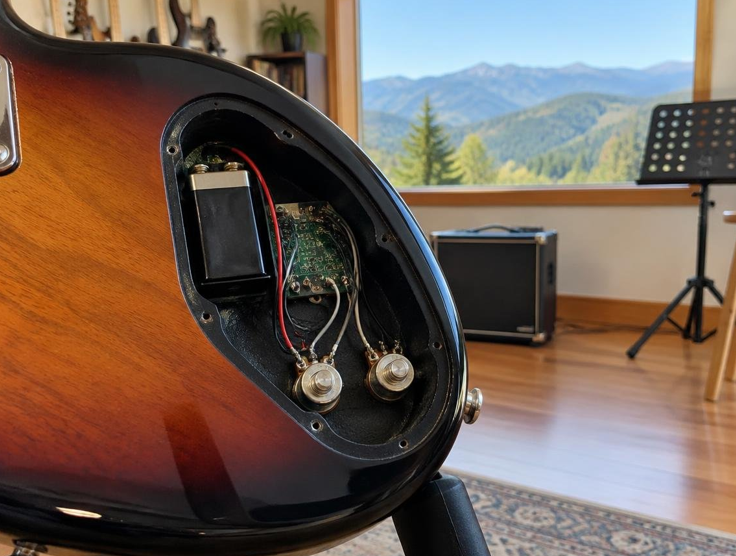
- Active basses incorporate a preamplifier circuit, which requires a 9V battery to operate. This preamp boosts the signal and often includes an onboard equalizer (EQ) that allows you to sculpt your tone directly from the instrument. Active basses typically offer a brighter, higher-output signal, making them popular for genres like rock and metal, where a powerful, articulate sound is desired. About 25% of beginners choose active basses for these tonal characteristics. However, remember to unplug your instrument when not in use to avoid draining the battery, a common oversight for new players!
Both passive and active systems have their merits. For beginners, a passive bass offers simplicity and a great foundation for learning tone. An active bass provides more tonal control, which can be exciting, but also adds a layer of complexity and maintenance.
Initial Setup, Essential Gear, and Foundation Techniques
Once you’ve chosen your performance beginner bass guitar, the next crucial steps involve setting it up correctly, acquiring essential accessories, and learning fundamental techniques. A properly set up instrument is far easier and more enjoyable to play, preventing early frustration.
Instrument Setup: While many new instruments from reputable brands come reasonably well set up, a professional setup is highly recommended. This involves adjusting the truss rod relief (the slight curve in the neck), string action (string height), and intonation (ensuring notes are in tune across the fretboard). A good setup minimizes fret buzz and makes the instrument much more comfortable to play. This initial investment in a setup can make a significant difference in your early learning experience.
Practice Routine Consistency: Effective practice is key to progress. Beginners who practice with a metronome or play-along tracks improve timing accuracy by an average of 40% within the first 3 months. Aim for short, consistent daily practice sessions rather than infrequent, long ones. Even 15-20 minutes a day can yield significant results and build crucial muscle memory.
Amplification and Practice Accessories
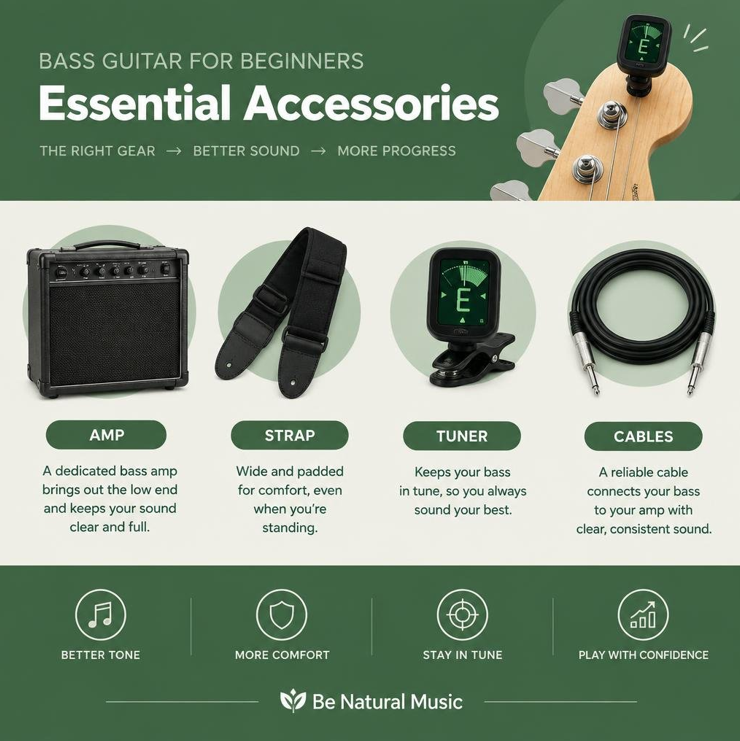
A bass guitar needs an amplifier to be heard properly. Unlike electric guitars, bass frequencies require dedicated bass amplifiers with speakers designed to handle low-end vibrations without damage. Never use a guitar amp for your bass, as their speakers are not built for the deep frequencies and can be easily damaged.
For beginners, a small practice amp is ideal. These typically range from 15 to 40 watts and often include a headphone jack for silent practice, which is invaluable for apartment dwellers or late-night sessions.
Practice Amplifier Wattage Speaker Configuration Ideal Use Case 15-25 Watts 8-inch or 10-inch speaker Solo practice, quiet environments 40-75 Watts 10-inch or 12-inch speaker Solo practice, small jam sessions Headphone Amps N/A (headphones only) Silent practice, travel Beyond the amp, you’ll need a few other essentials:
- Instrument Cables: Invest in a good quality cable to connect your bass to your amp.
- Wide Padded Strap: Essential for playing while standing, a wide, padded strap distributes the instrument’s weight and prevents discomfort.
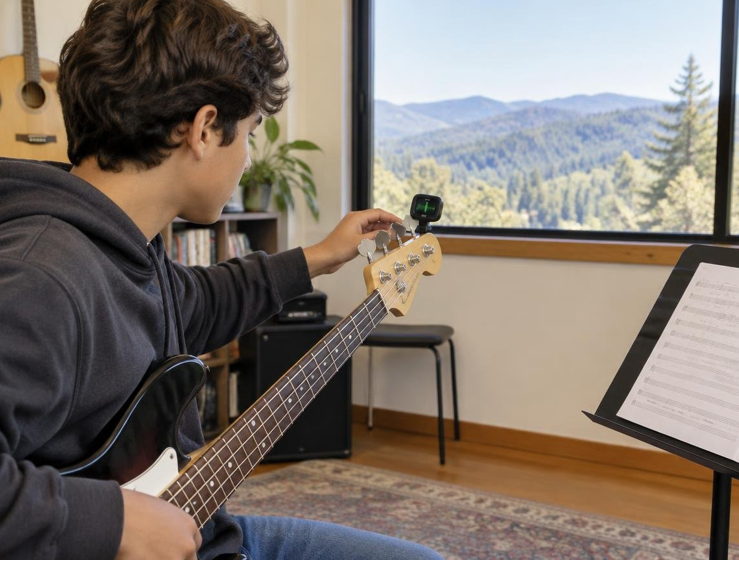
- Electronic Chromatic Tuner: A clip-on tuner is indispensable for keeping your bass in tune. While phone apps exist, a dedicated tuner is often more accurate and convenient.
- Protective Gig Bag or Case: To transport and protect your instrument from dust and minor bumps.
Tuning, Posture, and First Basslines
With your instrument set up and accessories in hand, it’s time to dive into playing.
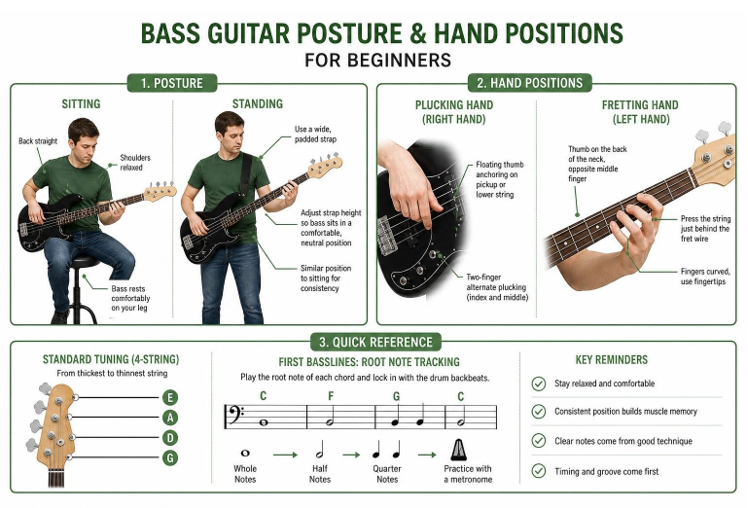
Tuning: The standard tuning for a 4-string bass, from thickest to thinnest string, is E-A-D-G. Use your electronic tuner to ensure each string is perfectly in pitch before you start playing. Consistent tuning is fundamental to developing a good ear and producing pleasant sounds.
Posture: Whether sitting or standing, maintaining good posture is vital for comfort and technique.
- Sitting: Keep your back straight, shoulders relaxed, and the bass resting comfortably on your leg.
- Standing: Adjust your strap height so that the bass is at a similar position whether you’re sitting or standing. This consistency helps maintain muscle memory and comfort. Avoid extremely low or high strap positions initially, finding a neutral spot where your fretting hand can comfortably reach all frets without straining.
Basic Playing Techniques:
- Plucking Hand (Right Hand for Right-Handed Players):Two-finger alternate plucking: This is a foundational technique. Use your index and middle fingers to pluck the strings in an alternating fashion, like walking. This builds speed and consistency.
- Floating thumb anchoring: Rest your thumb lightly on the pickup or a lower string to provide stability and mute unwanted string noise.
- Fretting Hand (Left Hand for Right-Handed Players):Keep your thumb on the back of the neck, roughly opposite your middle finger, but don’t grip too tightly.
- Press the string just behind the fret wire, not on top of it, to get a clear, clean note without buzzing.
- Keep your fingers curved, striking the string with the tips.
Your First Basslines: Start with simple root note tracking. This means playing the root note of each chord in a song. This is the essence of many basslines and helps you understand the harmonic role of the bass. Focus on locking in with the drum backbeats, particularly the kick drum. This creates the rhythmic “groove” that is the bass’s primary responsibility. Start with whole notes, then half notes, and gradually introduce quarter notes, always practicing with a metronome to develop solid timing.
Choosing the right beginner bass guitar comes down to comfort, playability, and the features that best match your musical goals. By considering body style, pickups, string count, scale length, and electronics, you can find an instrument that suits your needs. Pair it with a proper setup, essential accessories, and a consistent practice routine to build a strong foundation. Start with simple techniques, focus on timing, and enjoy the process of developing your skills as a bass player.