
What does the Medusa tattoo mean? This powerful question has sparked millions of searches as one of mythology’s most misunderstood figures transforms into a symbol of strength and survival.
The Medusa tattoo carries deep significance that extends far beyond ancient Greek mythology. For many, it represents resilience after trauma, feminine power reclaimed, and the ability to transform pain into protection.
In 2026, Medusa tattoos have become one of the most meaningful and personal designs in body art, with searches increasing by over 340% in recent years.
Whether you’re drawn to her serpent hair, her piercing gaze, or her story of transformation, understanding what the Medusa tattoo truly means can help you decide if this powerful symbol resonates with your own journey.
Table of Contents
The Greek Mythology Behind Medusa
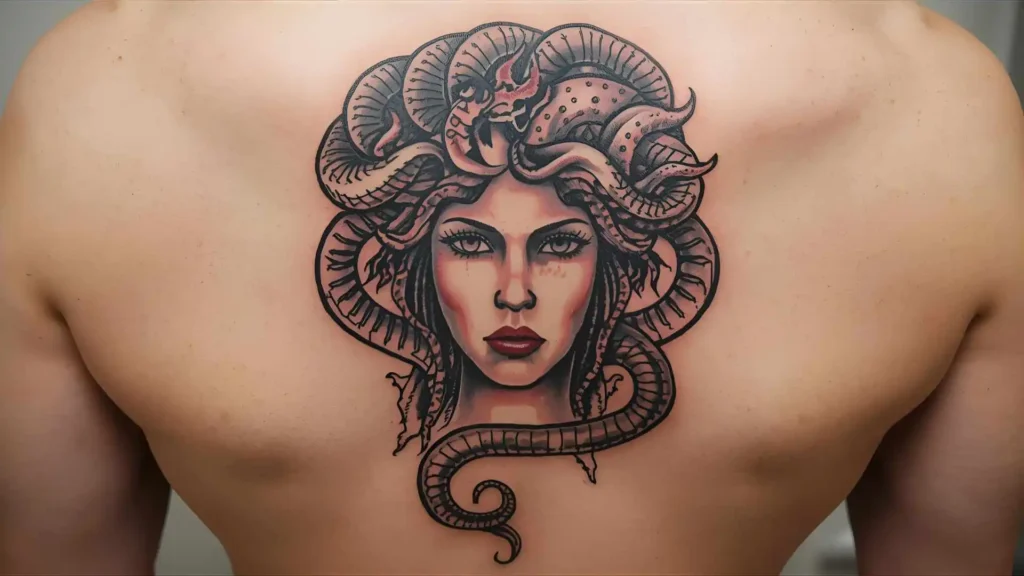
Who Was Medusa?
Medusa was one of three Gorgon sisters in ancient Greek mythology: Medusa, Stheno, and Euryale. Unlike her immortal sisters, Medusa was the only mortal among them, which made her vulnerable to both gods and mortals.
Her story begins not as a monster, but as a beautiful maiden. According to the Roman poet Ovid’s account, Medusa served as a priestess in the temple of Athena, the goddess of wisdom and war.
The Transformation Story
The most widely known version of Medusa’s myth involves a tragic violation. Poseidon, the god of the sea, assaulted Medusa inside Athena’s sacred temple. Instead of punishing Poseidon for this violation, Athena blamed Medusa for defiling her temple.
As punishment, Athena transformed Medusa’s beautiful flowing hair into writhing serpents. She cursed Medusa so that anyone who looked directly into her eyes would instantly turn to stone. This curse forced Medusa into exile and isolation.
The Perseus Encounter
The hero Perseus was tasked with bringing King Polydectes the head of Medusa. Using a polished shield as a mirror to avoid her deadly gaze, Perseus beheaded Medusa while she slept.
Even after death, Medusa’s severed head retained its power to petrify. Athena placed the head on her shield, called the Aegis, where it continued to serve as a protective symbol against enemies.
What Does the Medusa Tattoo Mean in 2026?
Symbol of Survival and Empowerment
The primary meaning of Medusa tattoos in 2026 centers on survival, particularly from sexual assault and abuse. Medusa has become a powerful symbol for survivors who see their own stories reflected in hers—a woman who was victimized, blamed, and then became powerful.
The tattoo represents reclaiming power after trauma. It’s a visual statement that says “I survived, and I refuse to be silenced.” Many survivors choose Medusa as their first or most meaningful tattoo because she embodies their journey from pain to strength.
Feminine Power and Rage
Medusa tattoos symbolize the righteous anger and power of the divine feminine. Her snake hair and deadly gaze represent a woman who refuses to be controlled, objectified, or diminished. She turns her curse into a weapon of protection.
For many women, Medusa represents the freedom to express rage without apology. She embodies the strength found in refusing to shrink or submit to expectations that demand silence and compliance.
Transformation and Rebirth
Like snakes shedding their skin, Medusa represents transformation. Her story is one of change—from beautiful maiden to feared Gorgon, from victim to powerful protector. This resonates with anyone who has undergone significant life changes or personal growth.
The Medusa tattoo can mark a turning point, symbolizing the transition from who you were to who you’ve become. It celebrates the beauty and strength that can emerge from even the darkest experiences.
Protection Against Negativity
Historically, Medusa’s image appeared on shields, armor, and temple doors to ward off evil. Today, Medusa tattoos serve a similar protective function, acting as spiritual armor against harm and negative energy.
Many people choose this tattoo to create a protective barrier around themselves. The symbolism suggests that like Medusa, they have the power to turn threats to stone—to stop harm before it reaches them.
The Rise of Medusa Tattoos on Social Media
TikTok and the #MedusaTattoo Movement
The #MedusaTattoo hashtag has exploded on TikTok, accumulating millions of views. Creators share powerful stories about their Medusa tattoos, explaining what the symbol means to them personally and connecting with other survivors.
This social media movement has helped destigmatize conversations about sexual assault. It’s created a community where survivors can recognize each other through shared symbolism without needing to speak their trauma aloud.
The #MeToo Movement Connection
Medusa tattoos surged in popularity alongside the #MeToo movement and increased awareness of sexual violence. The timing wasn’t coincidental—as more people spoke out about assault and abuse, the symbol of a woman punished for her victimization resonated deeply.
The movement to reclaim Medusa’s narrative from “monster” to “survivor” parallels broader cultural shifts toward believing survivors and holding perpetrators accountable rather than blaming victims.
Recognition and Connection
Many people report that their Medusa tattoos have led to profound connections with other survivors. The tattoo becomes a silent signal—a way to communicate “I understand” without words.
These moments of recognition can be deeply healing. They remind survivors that they’re not alone and that their experiences, while painful, have made them part of a community of resilient individuals.
Different Meanings for Different People
For Sexual Assault Survivors
For survivors of sexual violence, the Medusa tattoo often represents their journey from victimization to empowerment. It acknowledges trauma without being defined by it. The tattoo becomes a permanent stamp of survivorship displayed proudly rather than hidden in shame.
Therapist Anita Astley describes the Medusa tattoo as “the perfect visual depiction of a survivor’s journey from pain to resilience, strength, empowerment and self-preservation.” It removes stigma and replaces shame with power.
For Feminist Expression
Many people choose Medusa tattoos as feminist statements. She represents resistance to patriarchal narratives that demonize powerful women. Her story of being blamed for her own assault mirrors modern victim-blaming that feminism seeks to dismantle.
Medusa embodies feminine strength that refuses to conform to societal expectations. She represents independence, autonomy, and the complex duality of being both nurturing and deadly when necessary.
For Personal Transformation
Some choose Medusa to commemorate significant life changes unrelated to assault. Her transformation from one form to another symbolizes personal evolution, growth through adversity, and the courage to embrace new identities.
The tattoo can mark recovery from addiction, escape from toxic relationships, career transformations, or any journey where someone shed their old self to become something new and powerful.
For Aesthetic and Mythological Appreciation
Not everyone who gets a Medusa tattoo does so because of trauma. Some are simply drawn to Greek mythology, appreciate the artistic complexity of the design, or admire the visual drama of serpent hair and intense eyes.
These tattoos can represent an appreciation for ancient stories, connection to Greek heritage, or love of mythological art without carrying the deeper survivor symbolism.
Symbolism Elements in Medusa Tattoo Designs
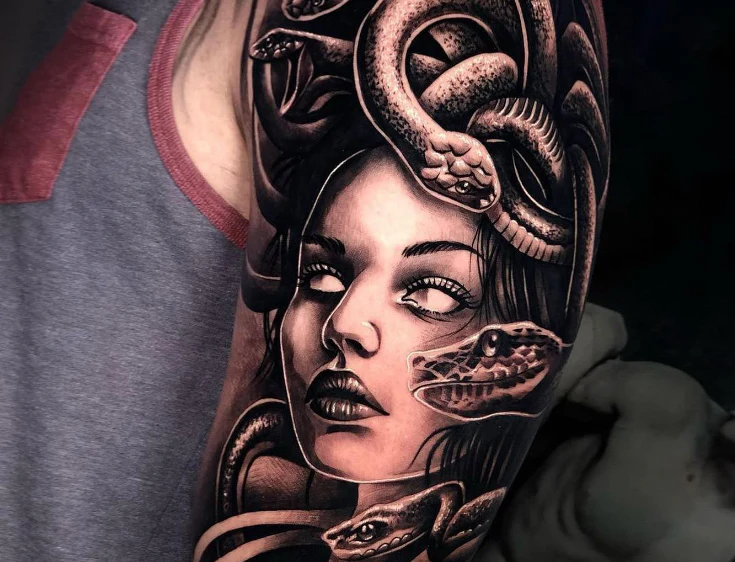
The Serpent Hair
Snakes represent transformation, regeneration, and the cyclical nature of life. They shed their skin and are reborn, just as survivors shed trauma and emerge stronger. The snakes also represent danger and the ability to strike when threatened.
In Medusa designs, the serpents can be depicted as aggressive and menacing or more elegant and graceful, depending on the intended symbolism.
The Petrifying Gaze
Medusa’s eyes hold immense power—the ability to turn threats to stone. In tattoo form, her gaze represents protection and the power to stop harm in its tracks.
Eyes in Medusa tattoos can be rendered with rage, sorrow, defiance, or grace. The emotional expression chosen significantly impacts the overall meaning of the design.
Broken Chains or Marble Elements
Many modern Medusa tattoos incorporate broken chains to symbolize freedom from bondage or oppression. Marble busts reference classical art while suggesting the breaking free from being objectified or frozen in victimhood.
These elements emphasize autonomy, liberation, and the reclamation of one’s own narrative.
Flowers and Feminine Touches
Some designs incorporate flowers, particularly roses or peonies, to soften Medusa’s image and emphasize beauty alongside danger. This represents the duality of feminine energy—both gentle and fierce.
Floral elements can also symbolize growth, beauty emerging from pain, and the reclamation of femininity on one’s own terms.
Popular Medusa Tattoo Styles in 2026
Realistic and Hyper-Realistic Designs
Realistic Medusa tattoos feature detailed, lifelike depictions with intricate serpents, textured stone elements, and photographic quality. These designs often include intense shading and dimensional depth that makes the image appear alive on skin.
This style speaks loudly and proudly. It’s ideal for those who want their Medusa to command attention and convey maximum visual impact.
Neo-Traditional Style
Neo-traditional Medusa tattoos combine classic tattoo elements with modern techniques. They feature bold black outlines, vibrant colors, and stylized proportions while maintaining the timeless appeal of traditional tattooing.
This style offers artistic flexibility and striking visual appeal. The bold lines ensure longevity, while the color palette allows for personal expression.
Blackwork and Illustrative
Blackwork Medusa tattoos use only black ink to create striking contrasts, intricate patterns, and dramatic shading. Illustrative styles incorporate artistic interpretation rather than strict realism, allowing for creative expression and symbolism.
These designs emphasize the mysterious and powerful aspects of Medusa. They often feel more artistic than literal interpretations of the myth.
Minimalist and Fine Line
Minimalist Medusa tattoos distill the image to essential elements—perhaps just the outline of a face with a few serpents, or a simplified profile. Fine line work creates delicate, detailed designs with thin, precise lines.
This style is perfect for smaller placements or those who prefer subtlety. It allows the symbolism to remain personal and intimate rather than boldly displayed.
Watercolor and Abstract
Watercolor Medusa tattoos incorporate splashes of color, gradient effects, and painterly techniques. Abstract interpretations focus on conceptual elements rather than literal depictions, using shapes, patterns, and symbolic references.
These styles offer artistic freedom and unique personalization. No two watercolor or abstract Medusa tattoos look alike.
Best Placement for Medusa Tattoos
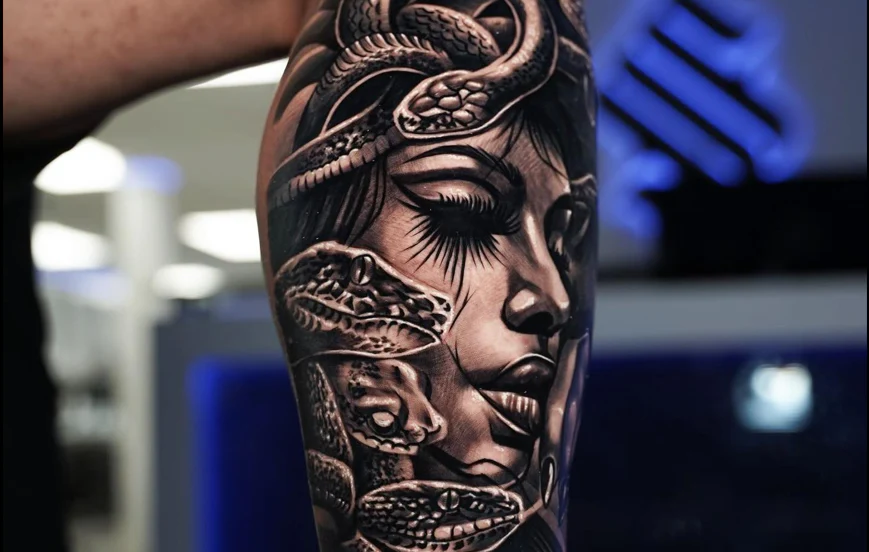
Thigh Placement
The thigh offers a large, relatively flat canvas perfect for detailed Medusa designs. This placement allows for substantial size while remaining easily concealable. Many survivors choose thigh placement because it’s a private location that can be revealed on their own terms.
The thigh also provides enough space for intricate serpent details and accompanying symbolic elements.
Back and Shoulder Blade
Large back pieces allow for dramatic, full-scale Medusa portraits with elaborate backgrounds. Shoulder blade placement positions Medusa as a guardian watching your back, offering symbolic protection.
This location works well for those who want a statement piece that commands attention when revealed.
Forearm and Upper Arm
Arm placements offer high visibility, making the tattoo a bold statement. The forearm provides a canvas that the wearer can easily see, serving as a daily reminder of their strength.
Upper arm placements can be partially concealed or revealed depending on clothing choices, offering flexibility.
Chest and Underboob
Chest placements position Medusa near the heart, symbolizing emotional resonance and personal significance. Underboob tattoos have become increasingly popular, offering an intimate placement that’s revealed selectively.
These locations emphasize the personal, private nature of the tattoo’s meaning.
Ribs and Side Body
Rib tattoos are known for being painful, which adds an element of endurance to the tattoo process itself. The pain can feel like a ritual—transforming suffering into art and strength.
Side body placements offer vertical canvas space for flowing, elegant designs where serpents can cascade down the torso.
Small and Discreet Placements
Wrist, ankle, behind the ear, or finger tattoos allow for meaningful Medusa symbols in miniature. These discreet placements keep the symbolism personal and private while still providing daily reminders of strength.
Small Medusa tattoos can be just as powerful as large ones when the meaning resonates deeply.
Medusa Tattoo Meaning for Men
Strength and Self-Mastery
Men choose Medusa tattoos to represent inner strength, discipline, and mastery over one’s own demons. The symbol represents rising above challenges and refusing to be broken by adversity.
Medusa’s power appeals to those who value resilience, determination, and the ability to protect what matters.
Protection and Guardianship
For men, Medusa often symbolizes protective instincts—guarding family, loved ones, or personal values. Her deadly gaze becomes a metaphor for defending against threats with unwavering strength.
This interpretation focuses on Medusa as a guardian figure rather than specifically as a survivor symbol.
Appreciation of Mythology
Many men choose Medusa tattoos simply because they appreciate Greek mythology, classical art, or the aesthetic complexity of the design. The intricate serpents and powerful imagery create visually striking tattoos.
This motivation doesn’t carry gendered meaning—it’s about artistic appreciation and connection to ancient stories.
Solidarity with Survivors
Some men get Medusa tattoos to show solidarity with survivors of sexual assault, particularly when supporting partners, friends, or family members. These tattoos make a statement about standing against sexual violence.
This demonstrates that Medusa’s meaning transcends gender when it comes to opposing assault and supporting survivors.
The Healing Power of Getting a Medusa Tattoo
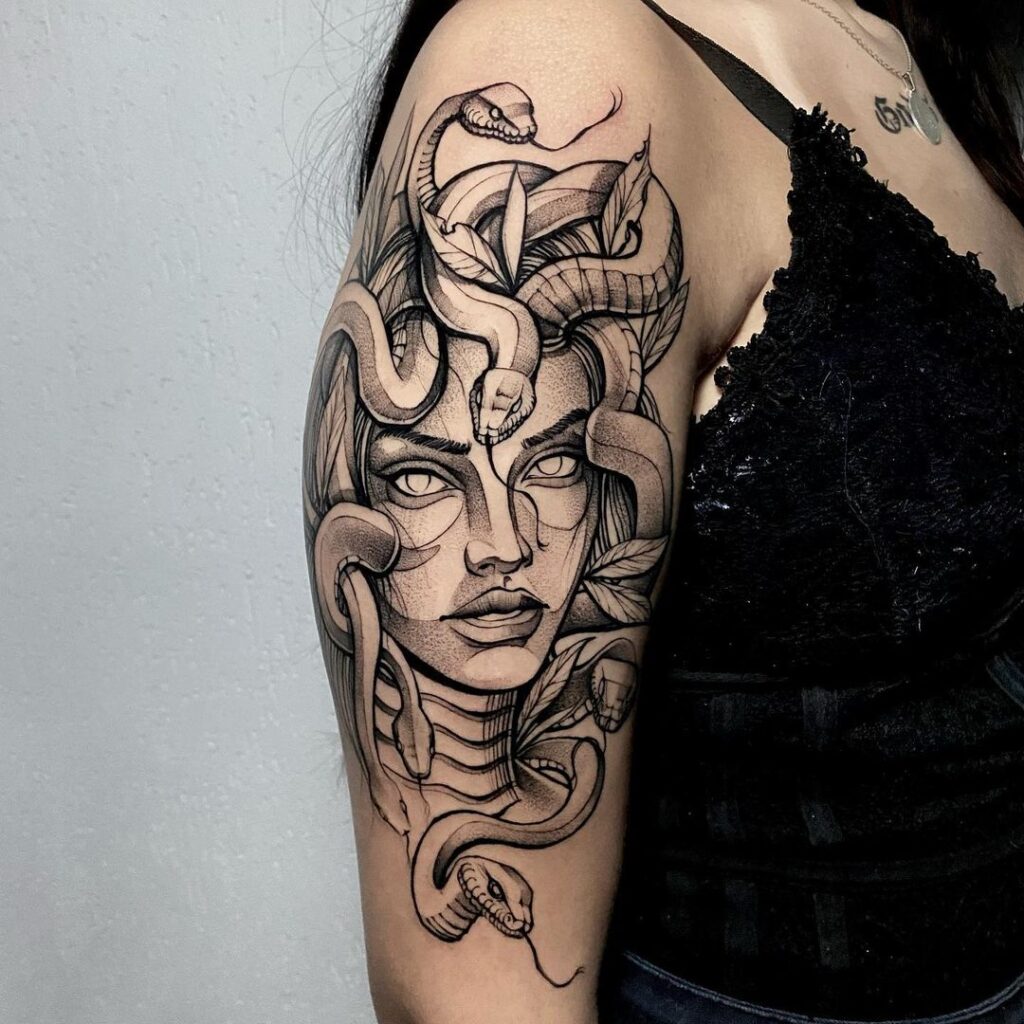
Reclaiming the Body
For survivors, getting a Medusa tattoo is an act of bodily autonomy. It transforms the body from something that was violated into a canvas for powerful self-expression chosen entirely on the wearer’s terms.
The process of selecting the design, choosing placement, and sitting through the tattoo becomes a ritual of reclamation.
Transforming Pain into Art
The physical pain of tattooing mirrors emotional pain in a controlled, chosen context. Unlike trauma, which happens to you, tattoo pain is something you choose and endure willingly, with a beautiful result.
This transformation of pain into permanent art can feel deeply healing and empowering.
Creating Visible Strength
The permanent nature of tattoos means that strength and survival become literally written on the body. The tattoo serves as a daily reminder that you survived, that you’re strong, and that you’ve transformed your pain.
For many, looking at their Medusa tattoo provides grounding and reassurance during difficult moments.
Building Community
Sharing Medusa tattoos on social media or having them recognized by other survivors creates community and connection. These moments of recognition remind people that they’re part of something larger than their individual experience.
The tattoo becomes a conversation starter and a way to find support and understanding.
Cultural Appropriation Considerations
Medusa as Shared Cultural Heritage
Medusa is a figure from Ancient Greek mythology, making her part of shared Western cultural heritage rather than closed or sacred religious symbolism. This means getting a Medusa tattoo doesn’t constitute cultural appropriation.
Greek mythology has influenced Western art, literature, and culture for thousands of years and is considered open for interpretation and artistic expression.
Respectful Design and Intention
While Medusa isn’t culturally restricted, respectful design and understanding of her story matter. Taking time to learn about the mythology and choosing a trauma-aware, skilled artist adds depth and care to the experience.
Understanding what Medusa represents—particularly to survivors—ensures that the tattoo is created with appropriate respect and intention.
Acknowledging Survivor Symbolism
If you’re getting a Medusa tattoo for aesthetic reasons without personal experience of assault, it’s worth acknowledging that for many people, this symbol carries profound trauma-related meaning.
This doesn’t mean you shouldn’t get the tattoo, but approaching it with awareness and respect honors those for whom Medusa represents their survival journey.
Choosing the Right Medusa Tattoo Artist
Finding a Trauma-Informed Artist
For survivors getting Medusa tattoos, finding a trauma-informed artist can make the experience safer and more healing. These artists understand the sensitivity required and create environments where survivors feel respected and in control.
Ask potential artists about their experience with survivor tattoos and their approach to creating safe, comfortable sessions.
Reviewing Portfolios for Style Match
Medusa tattoos require specific skills depending on the style chosen. Review artist portfolios carefully to ensure their style aligns with your vision—whether that’s photorealism, neo-traditional, blackwork, or minimalist.
Look for artists experienced in mythological designs, detailed serpent work, and expressive faces.
Communication and Consultation
A good artist will take time for thorough consultation, listening to what the tattoo means to you and incorporating that symbolism into the design. They should welcome your input and create collaborative designs.
Don’t hesitate to ask questions about the process, pain level, healing, and any concerns you have. The right artist will prioritize your comfort and understanding.
Female and Non-Binary Artists
Many survivors specifically seek female or non-binary tattoo artists who may bring unique perspectives to Medusa designs and create more comfortable environments for sharing sensitive stories.
This preference is entirely valid—choose an artist who makes you feel safe, heard, and respected.
Medusa Tattoo Aftercare
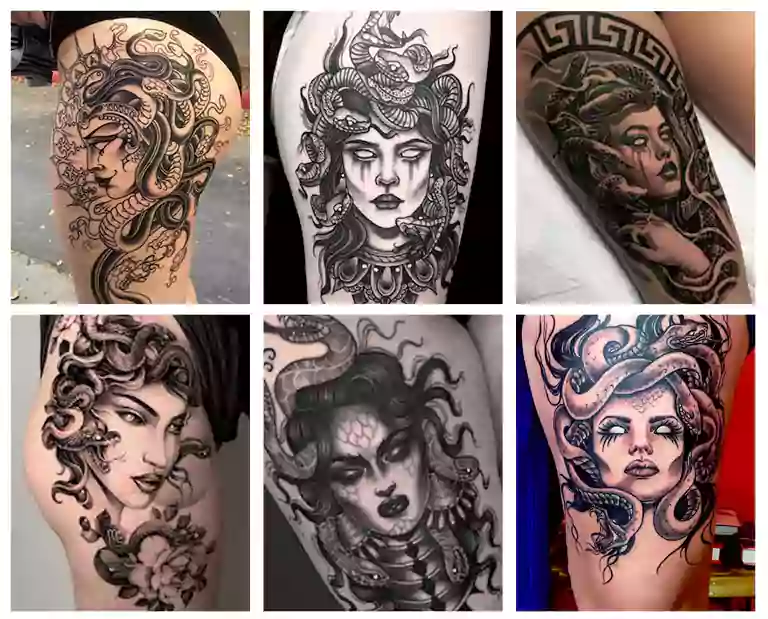
Initial Healing Process
Medusa tattoos, like all tattoos, require careful aftercare during the initial 2-4 week healing period. Keep the tattoo clean by washing gently with unscented soap and lukewarm water 2-3 times daily.
Apply a thin layer of recommended ointment or unscented moisturizer to prevent drying and cracking. Avoid soaking the tattoo in water, picking at scabs, or exposing it to direct sunlight.
Long-Term Care
Protect your Medusa tattoo from sun damage by applying sunscreen with at least SPF 30 whenever it’s exposed. Sun exposure causes fading and can diminish the vibrancy of colored tattoos.
Keep skin moisturized to maintain the tattoo’s clarity and prevent premature aging. Well-moisturized skin keeps ink looking fresh and detailed.
Touch-Ups and Maintenance
Over time, tattoos may require touch-ups to maintain crisp lines and color vibrancy. Fine line and minimalist Medusa tattoos may need refreshing sooner than bold, heavily saturated designs.
Discuss long-term maintenance with your artist during your initial consultation so you understand what to expect.
Common Misconceptions About Medusa Tattoos
“All Medusa Tattoos Mean the Same Thing”
While survival from sexual assault is a common meaning, Medusa tattoos carry diverse symbolism. Some represent general transformation, others feminine power, mythology appreciation, or aesthetic preference.
Never assume you know someone’s story based solely on their Medusa tattoo. The meaning is deeply personal and varies by individual.
“Only Women Get Medusa Tattoos”
Though more common among women, Medusa tattoos aren’t exclusively feminine. Men get Medusa tattoos for various reasons including strength, protection, mythology interest, and solidarity with survivors.
The symbol’s power transcends gender boundaries.
“Medusa Tattoos Are Disrespectful”
Some people misunderstand Medusa tattoos as celebrating a “monster” or being disrespectful. In reality, modern interpretations reclaim Medusa as a survivor and symbol of strength rather than a villain.
The tattoo honors resilience and challenges victim-blaming narratives rather than celebrating violence or monstrosity.
“You Need Trauma to Get a Medusa Tattoo”
While many survivors choose Medusa, you don’t need to have experienced assault to get this tattoo. Personal connection to the symbolism—whether through transformation, protection, or mythology—is what matters.
However, approaching the tattoo with awareness and respect for its survivor meaning is important.
Medusa Tattoos and Mental Health
Processing Trauma Through Art
For many survivors, getting a Medusa tattoo is part of trauma processing and healing. The act of choosing to permanently mark the body with a symbol of strength can be therapeutic and empowering.
Art therapy principles apply—creating or receiving art that represents your journey can facilitate healing and integration of difficult experiences.
Visible Reminders of Resilience
Medusa tattoos serve as constant visual reminders of survival and strength. During difficult moments or PTSD triggers, seeing the tattoo can provide grounding and reassurance that you’ve overcome challenges before.
The permanence creates stability—unlike feelings which fluctuate, the tattoo remains as a fixed symbol of your resilience.
Potential Challenges
For some people, tattoos related to trauma can become triggering reminders rather than empowering symbols. It’s important to carefully consider whether a permanent trauma-related tattoo will support or potentially complicate your healing.
Working with a therapist before getting trauma-related tattoos can help ensure the decision supports your mental health journey.
The Evolution of Medusa’s Image
From Monster to Icon
Historically, Medusa was portrayed as horrifying and monstrous—a creature to be feared and destroyed. Ancient and Renaissance art emphasized her ugliness and danger.
Modern interpretations reclaim her beauty and humanity. Contemporary Medusa art often depicts her as beautiful even with her serpent hair, emphasizing her tragedy and transformation rather than monstrosity.
Feminist Reinterpretation
Feminist scholarship and art have reexamined Medusa’s story through the lens of victim-blaming and patriarchal punishment. This reinterpretation sees her not as a villain but as a woman punished for being victimized.
This perspective has transformed Medusa into a feminist icon representing resistance to systems that blame and punish women rather than protecting them.
Contemporary Art and Media
Medusa appears in contemporary art, fashion, literature, and tattoo culture as a symbol of powerful femininity. The Versace logo features Medusa’s head, appropriating her power for commercial branding.
In tattoo culture specifically, Medusa has evolved into one of the most meaningful and personal symbols available, carrying layered significance that resonates across demographics.
Creating Your Personal Medusa Tattoo
Reflecting on Your Why
Before getting a Medusa tattoo, reflect deeply on what the symbol means to you personally. What aspects of her story resonate with your journey? What do you want to remember or celebrate through this permanent art?
Journaling about your connection to Medusa can help clarify your vision and ensure the tattoo will have lasting personal significance.
Customizing Symbolic Elements
Work with your artist to incorporate elements that personalize the design. This might include specific flowers, colors, accompanying symbols, quotes, or design elements that enhance the meaning.
Your Medusa tattoo should be uniquely yours, reflecting your individual story and aesthetic preferences.
Considering Size and Detail
Balance your vision with practical considerations. Highly detailed, realistic Medusa tattoos require significant size to capture all the intricate elements. Smaller placements work better for simplified or minimalist designs.
Discuss size and placement with your artist to ensure the design translates well to your chosen location.
Honoring Your Journey
Remember that your Medusa tattoo is more than just art—it’s a reflection of your journey, your strength, and your story. Take time to create something that honors where you’ve been and celebrates who you’ve become.
There’s no rush. The right design, artist, and timing will come together when it’s meant to.
Frequently Asked Questions
What does the Medusa tattoo mean?
The Medusa tattoo primarily symbolizes survival from sexual assault and abuse, feminine power, transformation, and protection. For many, it represents reclaiming strength after trauma and refusing to be silenced or ashamed of their experiences.
Is the Medusa tattoo only for assault survivors?
No, while Medusa tattoos are strongly associated with sexual assault survival, people get them for various reasons including general transformation, feminist expression, mythology appreciation, protection symbolism, or aesthetic preference.
Why has the Medusa tattoo become so popular?
Medusa tattoos surged in popularity alongside the #MeToo movement and increased awareness of sexual violence. The symbol resonated deeply as cultural conversations shifted toward believing survivors and challenging victim-blaming narratives.
What does a Medusa tattoo mean on TikTok?
On TikTok, the #MedusaTattoo tag has become a way for survivors to share their stories and connect with others who have similar experiences. It represents community, recognition, and the power of shared symbolism in healing.
Can men get Medusa tattoos?
Yes, men get Medusa tattoos for various reasons including strength, protection, mythology interest, appreciation of the artistic design, and solidarity with assault survivors. The symbol’s power transcends gender.
Where is the best place to get a Medusa tattoo?
Popular placements include the thigh (large canvas, concealable), forearm (visible reminder), back/shoulder (guardian position), chest (near heart), ribs (endurance), and small discreet locations like wrist or ankle. Choose based on personal preference and design size.
How much does a Medusa tattoo cost?
Medusa tattoo costs vary widely based on size, detail, color, artist experience, and location. Small, simple designs might start around $100-300, while large, detailed pieces can cost $500-2000 or more. Quality should take priority over price.
What style works best for Medusa tattoos?
Popular styles include realistic (detailed, lifelike), neo-traditional (bold lines, vibrant colors), blackwork (striking contrasts), minimalist (simplified elements), and watercolor (artistic, abstract). Choose based on personal aesthetic preference and placement size.
Are Medusa tattoos cultural appropriation?
No, Medusa is from Greek mythology, which is considered shared cultural heritage rather than closed or sacred. However, approaching the design with respect and understanding of her significance to survivors is important.
How painful is getting a Medusa tattoo?
Pain depends on placement, size, and individual pain tolerance. Ribs, chest, and areas with less fat/muscle tend to be more painful. Forearms and thighs are generally less painful. Many survivors find the pain transformative and empowering.
Conclusion
What does the Medusa tattoo mean in 2026 encompasses far more than ancient mythology. It represents the transformation of a figure once portrayed as monstrous into a powerful symbol of survival, strength, and feminine rage.
For sexual assault survivors, Medusa tattoos provide a way to reclaim their bodies and narratives, turning shame into pride and victimization into empowerment.
The meaning extends to anyone who has experienced transformation through adversity.
Medusa’s story of being blamed for her own violation, transformed by forces beyond her control, and becoming powerful despite injustice resonates across diverse experiences.
Her serpent hair symbolizes regeneration and change, her petrifying gaze represents protection and the power to stop threats, and her beauty-turned-dangerous embodies the complex duality of feminine strength.