
Why Does My Cat Bite Me? you’re not alone. This is one of the most common (and confusing) questions among cat owners. One moment your cat is purring happily, and the next—bite!
The truth is, cats don’t bite randomly. Biting is part of feline behavior, and it usually means your cat is trying to communicate something important.
Whether it’s play aggression, overstimulation, or even a fear response, every bite has a reason behind it.
This guide goes deeper than your competitors by not just listing reasons—but helping you read your cat like a pro, understand their body language, and fix the behavior long-term.
Table of Contents
Quick Table
| Situation | Possible Cause | What It Means | What To Do |
|---|---|---|---|
| Bites during play | Play aggression | Hunting instinct activated | Use toys, not hands |
| Bites while petting | Overstimulation | Petting threshold reached | Stop before irritation |
| Sudden bite | Fear response | Feels threatened | Give space |
| Bites randomly | Pain or illness | Possible health issue | Check with vet |
| Bites other pets/people | Territorial behavior | Protecting space | Gradual socialization |
| Light bites + licking | Communication | Affection or grooming | Redirect gently |
| Bites for attention | Attention seeking | Wants interaction | Set boundaries |
Why Do Cats Bite?
Cats bite because it’s a natural part of cat behavior and survival. Unlike humans, cats don’t use words—they rely on body language, subtle signals, and actions like biting to communicate.
At the core of this behavior is their hunting instinct. Even the most domesticated cat still has the instincts of a predator. That means chasing, pouncing, and yes—biting—are built into their DNA.
But not all bites are aggressive. Some are playful, while others are a defensive reaction to stress, fear, or discomfort.
For example, if your cat suddenly bites you while petting, it may have reached its petting threshold—the point where stimulation becomes overwhelming.
Cats may also bite due to environmental stress, like changes in routine, loud noises, or unfamiliar people. In these cases, biting is their way of saying, “I’m not comfortable.”
Understanding feline behavior is the key. Once you recognize that biting is communication—not misbehavior—you can respond correctly instead of reacting emotionally.
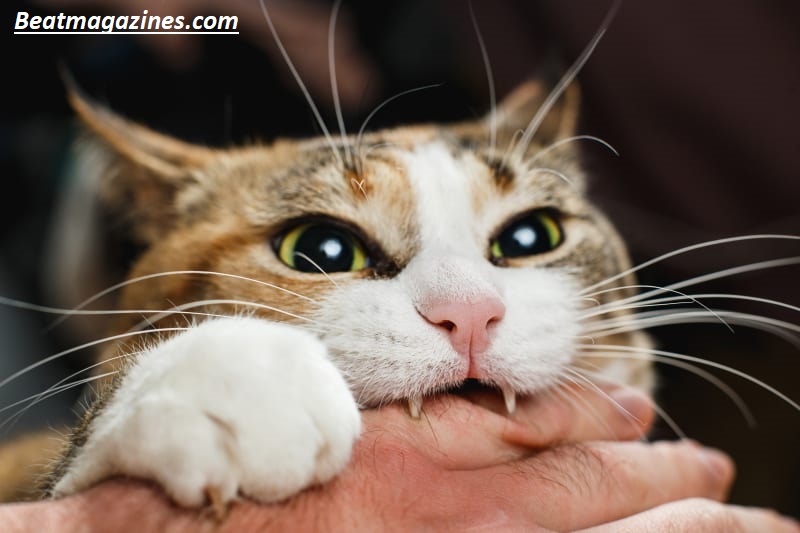
7 Reasons Why Your Cat Bites You
If you’re wondering “why does my cat bite me?”, the answer usually falls into one of these seven categories. Most cases of cat aggression are predictable once you understand the triggers.
Cats may bite due to:
- Natural play aggression
- Too much stimulation (overstimulation)
- A fear response or anxiety
- Hidden pain or illness
- Strong territorial behavior
- Desire for attention
- Simple communication signals
What most competitors miss is this: the same cat can bite for multiple reasons depending on the situation.
For example, a kitten may bite your hands during play (hunting instinct), while an older cat may bite because of joint pain or environmental stress.
Also, not all bites are equal. A gentle nibble means something very different from a sudden, hard bite. That’s why reading your cat’s body language (tail flicking, ears back) is crucial.
Below, we’ll break down each reason in detail—so you can identify exactly why your cat bites you and fix it effectively.
Play Aggression
Play aggression is one of the most common reasons cats bite. When your cat grabs your hand and bites, it’s not trying to hurt you—it’s practicing its hunting instinct.
Kittens especially learn to hunt through play. If they weren’t properly trained or separated from littermates too early, they may not understand bite limits.
Signs of play aggression:
- Pouncing
- Chasing hands or feet
- Light to moderate biting
Fix:
Never use your hands as toys. Instead, use wand toys or balls to redirect their energy. This teaches your cat that hands are not prey.
Overstimulation
Ever pet your cat and suddenly—bite? That’s overstimulation.
Cats have a petting threshold, and once it’s crossed, they react. What starts as pleasure can quickly become irritation.
Watch for body language signals:
- Tail flicking
- Ears turning back
- Skin twitching
These are warning signs before a bite.
Fix:
Stop petting at the first sign of discomfort. Short, gentle sessions work best. Over time, you’ll learn your cat’s limits and avoid triggering this type of cat aggression.
Fear or Anxiety
A scared cat may bite as a defensive reaction. This fear response happens when your cat feels trapped, threatened, or overwhelmed.
Triggers include:
- Loud noises
- Strangers
- Sudden movements
- New environments
In these moments, biting is a last resort.
Fix:
Give your cat space. Avoid forcing interaction. Reduce environmental stress by creating safe, quiet areas where your cat can retreat.
Building trust over time will reduce fear-based biting.
Pain or Illness
Sometimes, biting has nothing to do with behavior—it’s about pain.
If your cat suddenly starts biting, it could signal:
- Injury
- Dental issues
- Arthritis
- Internal illness
Pain changes feline behavior, making cats more reactive and defensive.
Fix:
Look for changes in habits—eating, sleeping, grooming. If biting is new or aggressive, consult a vet. Many cases of unexplained cat aggression are linked to medical problems.
Territorial Behavior
Cats are naturally territorial. If your cat bites when someone enters its space, it may be showing territorial behavior.
This often happens with:
- New pets
- Guests
- Changes in home environment
The bite is a warning: “This is my territory.”
Fix:
Introduce new people or animals slowly. Use scent swapping and gradual exposure. Reducing environmental stress helps your cat feel secure and less defensive.
Attention Seeking
Yes—your cat might bite you just to get your attention.
If biting leads to a reaction (talking, touching, feeding), your cat learns it works. This becomes a habit.
This type of behavior is often subtle and not aggressive.
Fix:
Don’t reward biting. Instead, give attention when your cat is calm. Reinforce positive behavior with treats or play.
Communication
Sometimes, a bite is simply communication.
Cats use gentle bites to say:
- “Stop”
- “I’m done”
- “Pay attention to me”
This is part of normal cat behavior and not true cat aggression.
You might notice this along with licking—your cat is grooming you.
Fix:
Respect the signal. Learn your cat’s body language and respond early before the bite happens.
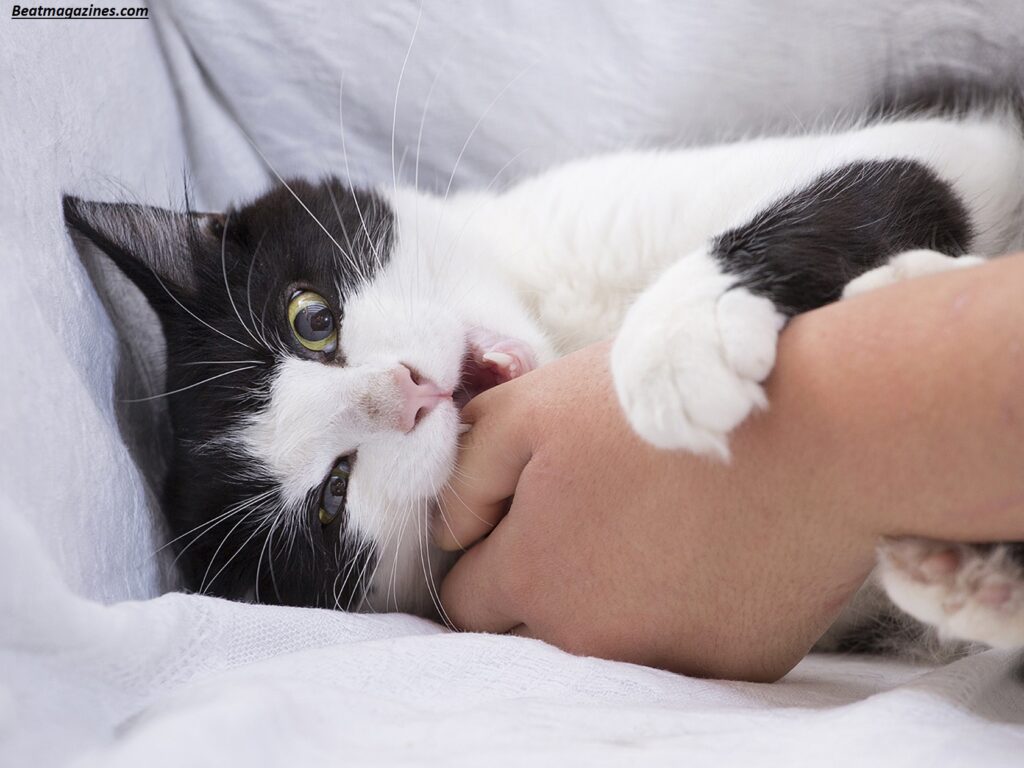
How to Stop Your Cat From Biting
Stopping biting starts with understanding the cause. There’s no one-size-fits-all solution because each bite is linked to different feline behavior triggers.
Here are proven strategies:
Redirect Energy
Use toys to satisfy your cat’s hunting instinct. Daily play reduces play aggression.
Respect the Petting Threshold
Watch for body language (tail flicking, ears back) and stop before irritation.
Avoid Punishment
Punishing a cat increases fear and environmental stress, making biting worse.
Reward Good Behavior
Positive reinforcement works best. Reward calm, non-aggressive interactions.
Create a Calm Environment
Reduce loud noises, sudden changes, and stressors.
Consult Experts
If biting continues, seek help from veterinary behaviorists who specialize in cat aggression.
Consistency is key. Over time, your cat will learn safer ways to interact.
Signs Your Cat Is About to Bite
Cats rarely bite without warning. The key is recognizing their body language before it happens.
Warning Signs:
- Tail flicking or whipping
- Ears pinned back
- Dilated pupils
- Sudden stillness
- Low growling or hissing
- Skin rippling
These signals indicate rising tension or overstimulation.
For example, during petting, a twitching tail means your cat is nearing its petting threshold. Ignoring this leads to a bite.
In fearful situations, a crouched posture and wide eyes signal a fear response.
Understanding these cues transforms how you interact with your cat. Instead of reacting after a bite, you prevent it entirely.
This is where most owners go wrong—they miss the early signs.
Mastering feline behavior means paying attention to subtle changes. Your cat is always communicating—you just need to learn the language.
When to See a Vet
Not all biting is behavioral. Sometimes, it’s medical.
You should consult a vet if:
- Biting starts suddenly
- Your cat becomes unusually aggressive
- There are changes in eating or grooming
- Your cat hides more than usual
- The bite seems unprovoked
Pain can trigger a strong defensive reaction. Even gentle cats may bite when hurting.
Conditions like dental disease, arthritis, or injury can alter cat behavior quickly.
In complex cases, veterinary behaviorists may be needed. They specialize in both medical and behavioral causes of cat aggression.
Ignoring these signs can worsen the issue. Early diagnosis leads to faster solutions.
FAQ’s
Why does my cat bite me gently?
It’s usually communication or affection, not aggression.
Why does my cat bite me then lick me?
This is grooming behavior—a mix of bonding and instinct.
Why does my cat bite me when I pet him?
Likely overstimulation or reaching the petting threshold.
Why does my cat bite me unprovoked?
It may not be unprovoked—look for subtle body language signals.
Why does my cat bite my hands?
Hands may trigger play aggression if used as toys.
Conclusion
Biting is a natural part of feline behavior, driven by instinct, emotion, and communication.
Whether it’s play aggression, overstimulation, a fear response, or even territorial behavior, your cat is trying to tell you something.
The biggest mistake most cat owners make is assuming biting is random or “bad.”
In reality, it’s predictable once you learn to read your cat’s body language (tail flicking, ears back) and understand their limits—especially their petting threshold.
What sets you apart from other owners is awareness. When you recognize early warning signs, reduce environmental stress, and respond correctly, biting becomes preventable.
Also, remember that not all biting is behavioral. Sudden changes may signal pain or illness. When in doubt, consult professionals, including veterinary behaviorists, to rule out medical issues.
The goal isn’t to stop your cat from expressing itself—it’s to guide that expression in a safe, healthy way.
With patience, consistency, and a better understanding of cat behavior, you can build a stronger bond with your cat—one without unexpected bites.