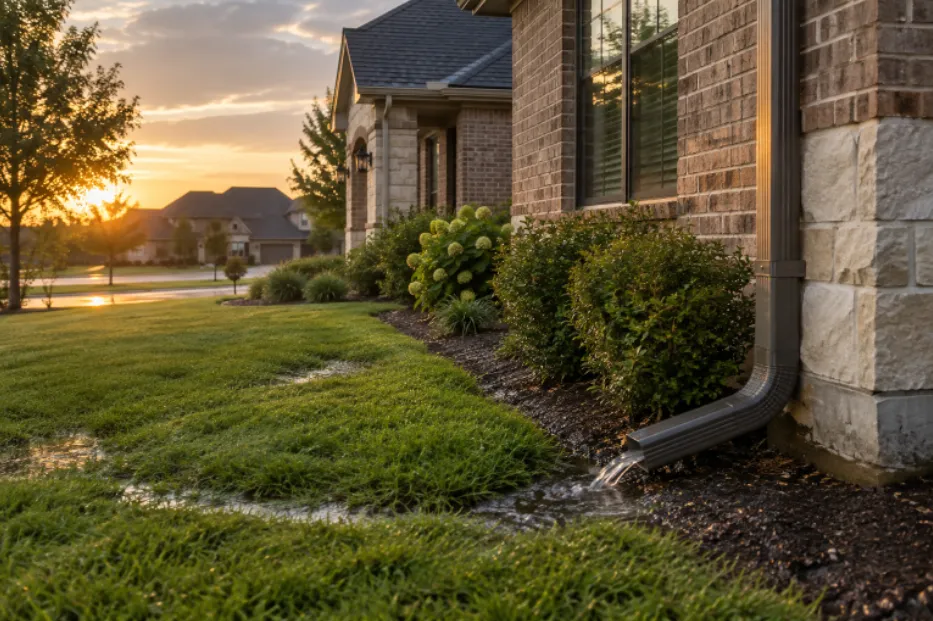
Why Drainage Matters in Dallas
Rainwater collected by a roof needs somewhere intentional to go. A properly planned system directs it away from exterior walls, walkways, planting beds, and the foundation. Homeowners considering seamless gutter installation in Dallas, TX should look beyond the roof edge and consider the entire route water follows once it reaches the ground.
Dallas weather can bring intense rainfall followed by long dry stretches. Those changing conditions make it especially important to avoid repeatedly soaking the soil immediately beside a home. Roofs, driveways, patios, and other hard surfaces do not absorb rainfall, so they increase the volume of water moving across a property during a storm.
How Water Moves Around a Home
A home drainage system works best when each step supports the next:
- Rain falls onto the roof.
- Water flows toward roof edges, valleys, and low points.
- Gutters collect and guide the runoff to downspouts.
- Downspouts carry water to ground level.
- Grading, extensions, swales, or approved drains guide it away from the house.
One weak link can undermine the entire setup. A clean gutter still will not solve a drainage concern if its downspout empties beside the foundation, or if the soil slopes back toward the house.
Warning Signs of Poor Drainage
Walk the property after a steady rain and look for conditions that deserve closer attention:
- Water spilling over a gutter or roof edge.
- Puddles that remain near the foundation after the surrounding areas begin to dry.
- Washed-out soil beneath downspouts.
- Channels forming through mulch or flower beds.
- Water stains or splash marks on exterior walls.
- Loose, blocked, or disconnected downspouts.
- Water moving across patios, driveways, or walkways toward the home.
- New cracks in hardscape, brick, or interior finishes.
These conditions do not automatically establish a foundation problem, but they are useful reasons to review where runoff is collecting and traveling.
The Main Parts of a Home Drainage System
Roof Edges, Gutters, and Downspouts
Gutters collect roof runoff rather than allowing it to drop freely along the exterior wall. Downspouts then move that collected water to a discharge point. Their location matters just as much as their number, particularly at roof valleys where several sections may feed one corner.
Extensions, Splash Blocks, Grading, and Swales
Extensions and splash blocks can help spread water away from the structure, but they need a yard surface that continues the water’s path outward. Gentle grading and shallow swales can direct runoff toward an appropriate outlet. Any change that could affect a neighboring property or public drainage area should be reviewed carefully before work begins.
Planning for Roof Runoff
Roof size, shape, valleys, and drainage concentration should guide the plan. A long, straight roofline may distribute water fairly evenly, while a complex roof can send a large amount of runoff to one corner.
- Identify roof valleys and low points.
- Check whether gutters appear undersized, sagging, or frequently overwhelmed.
- Confirm that every downspout has a clear discharge route.
- Measure the distance between discharge points and the foundation.
- Observe whether fences, beds, concrete, or retaining walls trap runoff.
For example, a corner fed by multiple roof sections may need a more deliberate outlet plan than a roof edge with only one small contributing area.
Soil, Grading, and Landscaping
Drainage planning cannot stop at the downspout. Soil texture, slope, mulch, plants, concrete, fences, and nearby structures influence how water behaves after it leaves the roof. The EPA notes that stormwater runs off roofs and paved areas because those hard surfaces cannot absorb it like undeveloped ground can.
Clay-rich soil deserves particular care. Texas A&M AgriLife Extension explains that heavy clay soil can be unsuitable for some underground infiltration systems, since its wet-and-dry movement can complicate drainage design near structures.
- Keep soil and mulch below vulnerable exterior materials.
- Use durable ground cover where downspouts create concentrated flow.
- Shape planting beds so they do not hold water against the house.
- Keep drainage paths open when refreshing mulch or adding landscape borders.
Choosing Durable Materials
Material selection should reflect the roof design, appearance goals, budget, and exposure to branches or debris. Aluminum is widely used because it is lightweight. Steel can offer added strength, while copper has a distinctive appearance and typically costs more. Underground pipe can suit certain sites, but it needs proper slope, access for maintenance, and a safe outlet. No material compensates for blocked outlets, poor support, or discharge directed toward the home.
A Simple Storm-Readiness Inspection
- Walk around the home and look for loose or sagging gutter sections.
- Check that downspouts are connected and clear of visible debris.
- Look below each outlet for erosion or standing water.
- Inspect corners and valleys for evidence of overflow.
- Watch for hard surfaces that send water back toward the house.
- Take photos before and after significant rain for comparison.
Ground-level checks can reveal many issues. Avoid roof access or unstable ladder work during wet or windy conditions.
Common Drainage Mistakes to Avoid
- Ending a downspout directly beside the foundation.
- Using a short splash block where the yard slopes toward the house.
- Sending several roof sections into one limited outlet.
- Installing underground drainage without a clear exit point.
- Adding soil or mulch against exterior walls.
- Assuming a new roof automatically resolves runoff concerns.
Seasonal Maintenance Steps
Before Stormy Periods
Remove leaves and twigs, check supports and joints, and clear obvious blockages around outlets. Homes beneath mature trees may need more frequent attention.
After Severe Weather
Check for dents, loose sections, shifted downspouts, fallen branches, and newly eroded soil. Address small defects before the next storm exposes them further.
Before Winter
Clear late-season debris and confirm that runoff can move freely through gutters, downspouts, and discharge areas.
When to Call a Qualified Professional
Professional evaluation may be appropriate when water repeatedly pools near the foundation, drainage changes could affect neighbors, soil is moving, cracks are appearing, or an underground drainage route is being considered. Ask for a clear explanation of the water path, final outlet, maintenance requirements, and any local requirements that may apply.
Final Thoughts
A dependable Dallas home drainage plan does more than move water off the roof. It manages where that water goes next. By reviewing gutters, downspouts, yard slope, soil conditions, landscaping, and outlet locations as one connected system, homeowners can make practical decisions before a small runoff issue becomes a more complicated repair.