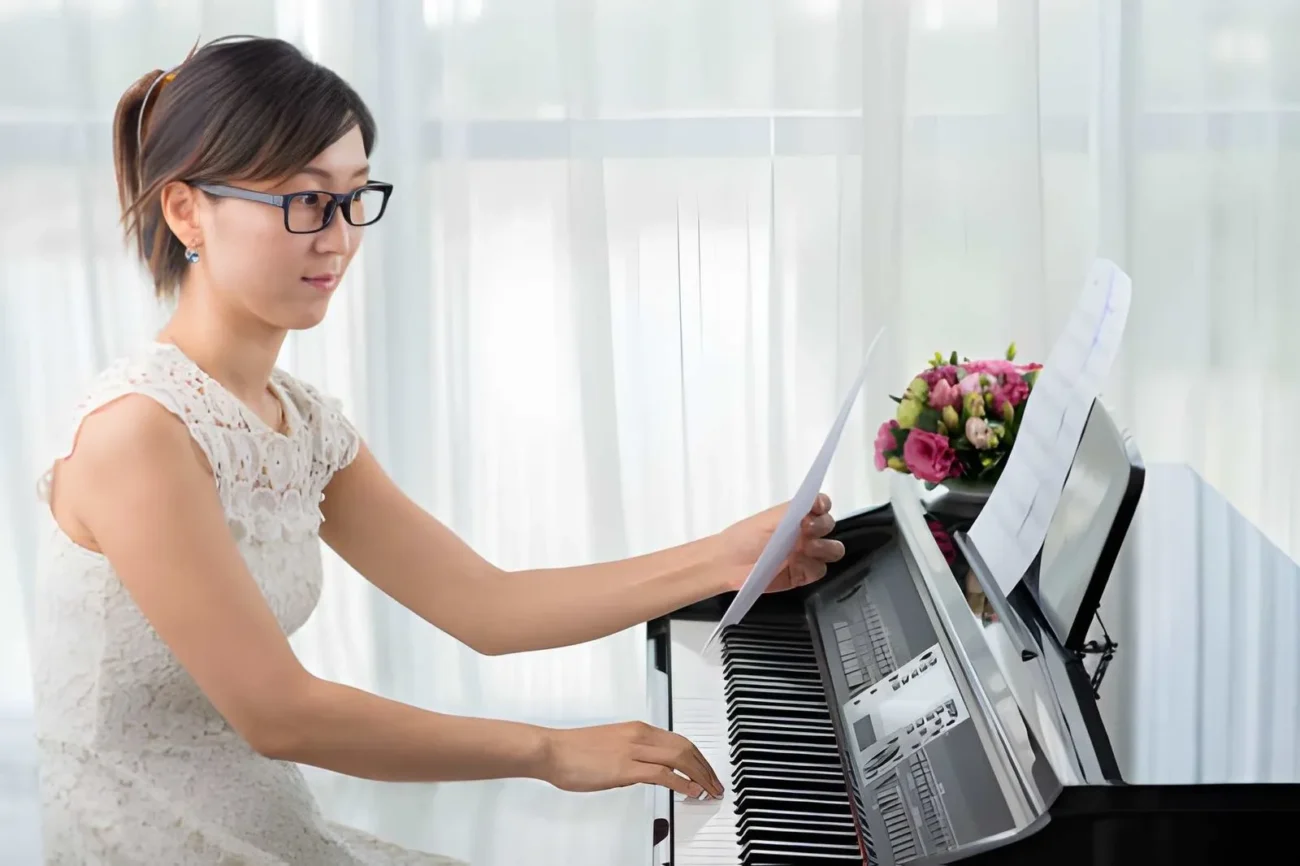
People put off taking up piano lessons as adults. They feel that they are too old, too busy, or even too inexperienced to start. This is true to some extent. But this need not discourage anyone.
Adults come to piano lessons with a lot of interest and sometimes, even experience. Adult piano lessons with 1on1 Piano can provide a convenient way to build skills from home. It is best for learners who want structured guidance without regular travel,
You Are Never Too Old to Start
There are no age restrictions for playing piano. Some adults start from scratch. Other adults come back to piano playing after many years.
Being older when starting piano lessons can even make the process more personal. Adults can pick their favorite music and figure out what inspires them to take up this hobby. One person may want to play their favorite songs.
Find a Teacher Who Fits You
Your connection to the teacher may affect how motivated you will be. Most people require teachers who respect their aspirations. The teacher must be aware that work and family life might impact their ability to practice.
Think about whether you find their way of teaching comfortable. Some teachers teach mainly through technique. Others balance it with music and actual playing. There is no single correct way here.
Also think about your musical preferences. If you love classical music, jazz, film music, pop, or any other genre, then a teacher who is aware of it may motivate you more.
In general, your teacher should make you feel comfortable asking questions. Learning becomes easier when you can ask a second time if you don’t understand something.
Time is one of the primary concerns among adult learners. You might be fully occupied with work and other responsibilities.
You don’t necessarily need a number of spare hours in the evening
Learn Technique from the Beginning
Some adults don’t have any patience and want to start directly with songs without learning technique first. Music is important, of course, but technique will make it easier for you in the future.
Your teacher will assist you in positioning yourself in the right way, positioning your hands and fingers, and controlling the work of both hands. All these things are small things which will become essential as pieces get harder.
You will learn scales today and your favorite songs tomorrow.
Learning should not be a test. Learning should be the progress towards achieving what you want.
In lessons, you can even discover new music. Your teacher will give you difficult but not impossible to accomplish pieces.
Use Lesson Material Between Sessions
Lessons guide you, but the progress takes place in between lessons as well. Make use of notes, recordings, sheet music marked by your teacher, and any other resources that your teacher gives you.
Take practice instructions in written form if required. Highlight those parts that you find difficult. In case your teacher makes a recording of your demo, make use of it throughout the week.
It will help you save time, as now, instead of trying to recall exactly what was happening in your lesson, you have some concrete material to refer to.
Do Not Be Afraid of Mistakes
In some cases, adults are harsher on themselves than children.
You might expect instant results because you are used to being efficient in other areas of life.
Learning piano is not like that.
Mistakes are expected in the process.
A mistake could tell you where you need to be more in control.
Another mistake could help you know where to slow down.
A mistake could show you what you need to practice more.
You should not judge yourself.
You should learn from your mistakes, change one thing, and try again.
Keep Lessons Personal
Learning works best for adults when classes fit their reasons for enrolling. Inform your teacher about what you wish to accomplish.
You might be looking for something enjoyable to do after work. Maybe you want someone to back up your singing. It could just be a creative outlet for you.
This is important since it will help the teacher pick appropriate material to use in the lesson.
You can switch things around as your interests evolve, and learning the piano doesn’t always follow a set program.
Make Learning a Long-Term Habit
There is excitement during the early weeks. Afterward, motivation might be erratic. This is all very common. Build routines that help you return to the piano easily. Make sure your instrument is always accessible. Set goals. You don’t need timing, free time, or prior experience. All you need is to start and continue.