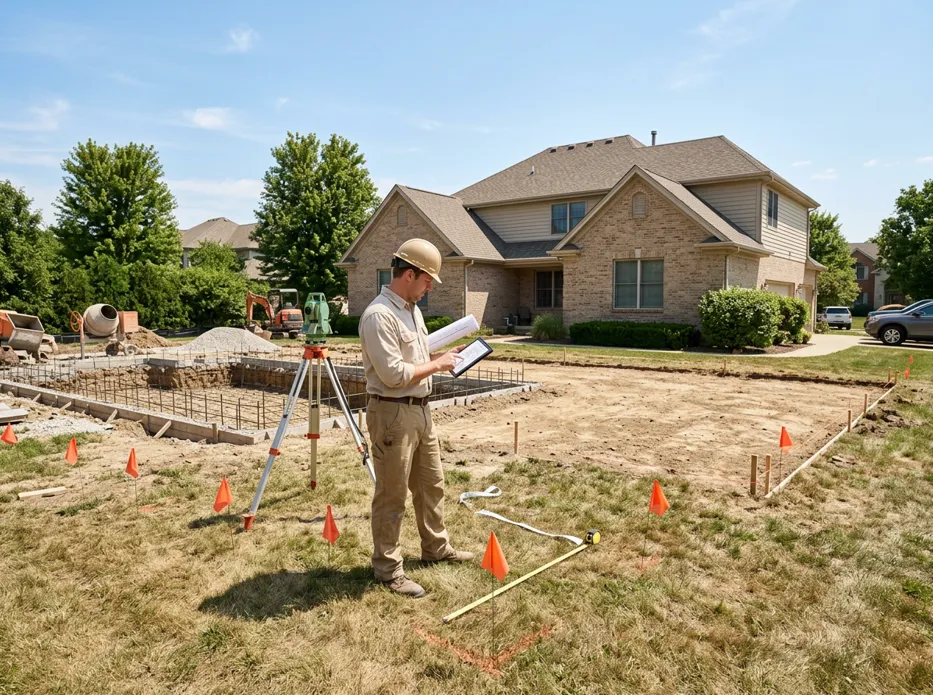
Planning Comprehensive Backyard Upgrades: Pools and Concrete Patios
Embarking on a backyard transformation that includes both custom in-ground swimming pools and concrete patios is a significant undertaking that requires meticulous planning. The success and longevity of your outdoor oasis hinge on a thorough understanding of your property and careful coordination of all elements.
Our initial step always involves a comprehensive site assessment. This goes beyond simply measuring the available space; it delves into the underlying conditions of your yard. Understanding soil mechanics is crucial, as the load-bearing capacity of the soil directly impacts the structural integrity of both the pool and the patio. Poor soil conditions might necessitate additional excavation, soil amendments, or specialized foundations, which can affect both timeline and budget.
Equally important is planning for proper drainage grading. Water management around a pool and patio is paramount to prevent erosion, structural damage, and standing water issues. We design the landscape to gently slope away from your home and the pool, ensuring efficient water runoff. This often involves strategic placement of French drains or other subsurface drainage systems.
Before any digging begins, accurate utility mapping is essential. Identifying the location of existing water lines, sewer pipes, gas lines, and electrical conduits prevents costly and dangerous accidents during construction. This mapping also informs the best placement for new utilities required for the pool (filtration, heating, lighting) and patio features (outdoor kitchens, fire pits).
Finally, considering a turnkey budgeting approach from the outset can save homeowners considerable stress and unexpected costs. This means accounting for all aspects of the project—from excavation and pool installation to decking, fencing, landscaping, and final touches—rather than piecemeal budgeting. A comprehensive plan allows for better cost control and ensures that all components integrate seamlessly.
Designing Seamless Transitions Between Water and Hardscaping
The aesthetic appeal and functionality of your backyard upgrade are greatly enhanced by how seamlessly your pool integrates with its surrounding concrete patio. Achieving this fluid connection involves several key design considerations.
Coping selection plays a critical role. Coping is the material that caps the edge of the pool, providing a finished look and a safe edge for swimmers. Options range from poured concrete that matches the patio, to natural stone, precast concrete, or brick. The choice impacts both the visual transition and the practical aspects of water run-off and slip resistance.
Proper expansion joints and isolation gaps are non-negotiable between the pool coping and the patio slab. Concrete expands and contracts with temperature changes, and without these deliberate separations, cracking can occur in either the patio or the pool structure. Expansion joints are typically filled with a flexible material, allowing independent movement. Isolation joints completely separate the patio from the pool shell, preventing any direct transfer of stress.
Elevation steps should be thoughtfully designed, particularly if your patio features multiple levels or if the pool deck is slightly raised. Gentle, wide steps create a welcoming transition and enhance safety, especially when wet. Integrating these steps into the overall patio design ensures they feel like an intentional feature rather than an afterthought.
Effective deck integration means the patio feels like a natural extension of the pool area, rather than a separate entity. This can be achieved through consistent material choices, complementary color palettes, and thoughtful layout that guides movement and defines different zones within your outdoor space.
Multi-Phase Execution for Long-Term Property Value
For homeowners with long-term visions or phased budgets, a multi-phase approach to backyard upgrades can be an excellent strategy. This allows for budget flexibility while ensuring the final result is a cohesive, high-value outdoor living space. The key to success in multi-phase projects is thorough master planning.
Even if you’re only building the pool and a basic patio now, a master plan outlines the future additions like a spa, outdoor kitchen, or extensive landscaping. This foresight prevents costly rework later. For instance, utility staging involves running conduits and plumbing for future features (like a gas line for a fire pit or electrical for an outdoor kitchen) during the initial excavation, even if they won’t be connected for years. This is far more economical than digging up a finished patio.
Similarly, conduit placement for future lighting, sound systems, or automated pool covers should be considered early. Planning for structural retaining elements, such as retaining walls for future garden beds or raised patio sections, ensures proper foundation work is done from the start. This strategic approach to future-proofing your backyard means that each phase builds upon the last seamlessly, contributing to a unified design and maximizing long-term property value.
Selecting the Best Concrete Patio Finishes for Poolside Safety and Style
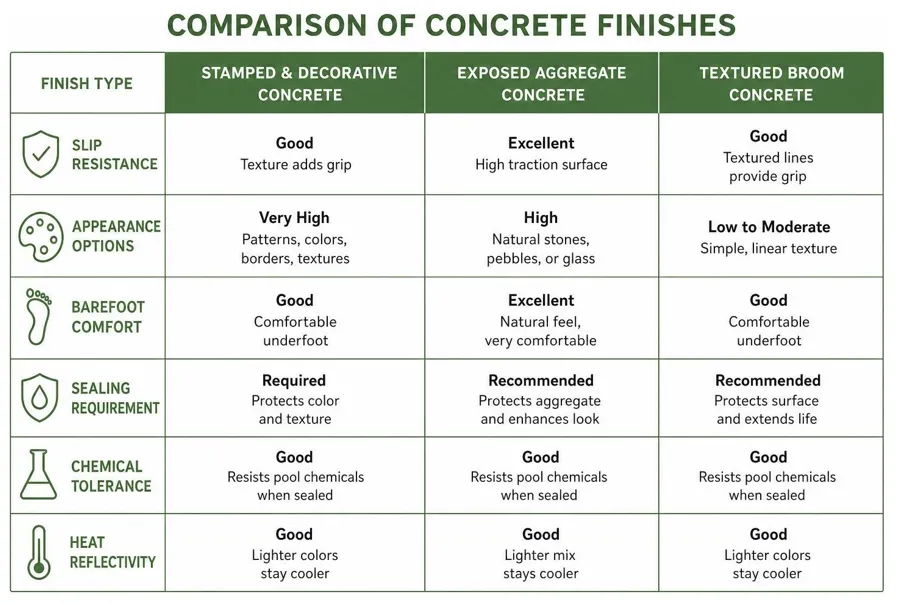
The choice of concrete finish for your poolside patio is a critical decision, balancing aesthetic desires with essential safety and durability requirements. Around a pool, the surface must primarily offer excellent slip resistance to prevent accidents, especially when wet. Beyond safety, the finish contributes significantly to the overall look and feel of your backyard.
Consideration must also be given to surface sealing. A high-quality sealer protects the concrete from moisture penetration, staining, and the corrosive effects of pool chemicals like chlorine. Sealers also enhance the finish’s appearance and can extend its lifespan. Heat reflectivity is another practical concern; lighter colors and certain finishes can help keep the patio cooler underfoot during hot summer days. Finally, the chosen finish must exhibit strong chemical tolerance to withstand regular exposure to chlorinated water and cleaning agents without degradation or discoloration.
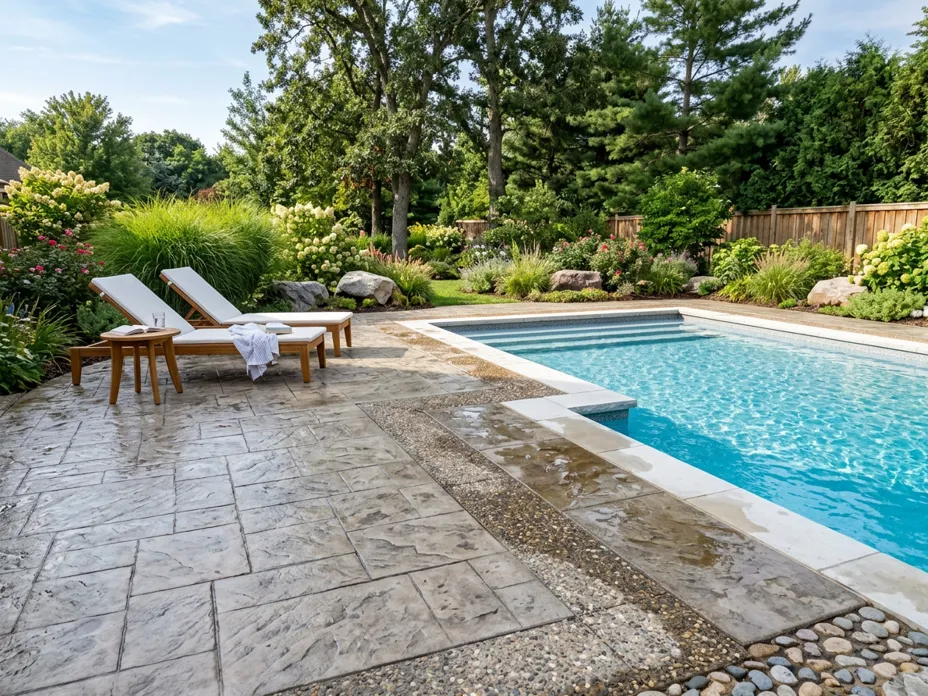
Stamped and Decorative Concrete Finishes
Stamped concrete offers an incredible range of design possibilities, allowing homeowners to achieve the look of more expensive materials at a fraction of the cost. This technique involves pressing molds into freshly poured concrete to replicate the textures and patterns of natural stone, brick, or wood.
Popular choices for poolside areas include slate impressions and flagstone patterns, which provide a natural, organic feel. These patterns often come with inherent texture, contributing to slip resistance. For added visual interest, decorative borders can be incorporated, defining the patio edges or separating different zones.
The color of stamped concrete is achieved through integral pigments mixed directly into the concrete, or through color hardeners applied to the surface. Release agents, used during the stamping process, not only prevent the stamps from sticking but also impart secondary colors and highlight the texture, adding depth and realism to the finish. When properly sealed, stamped concrete can be a beautiful and durable choice for a pool patio.
Exposed Aggregate and Textured Broom Finishes
For those prioritizing superior traction and a more natural, tactile feel, exposed aggregate and textured broom finishes are excellent options.
Exposed aggregate concrete reveals the natural beauty of the stones, pebbles, or crushed glass embedded within the concrete mix. After the concrete is poured and set, the surface paste is removed to expose these aggregates, creating a highly textured, non-slip surface that is ideal for poolside environments. The variety of aggregates available allows for diverse aesthetic effects, from subtle river rock to vibrant glass chips. It offers excellent traction control and is comfortable for barefoot comfort, making it a perennial favorite around pools. Regular application of topical sealers is recommended to protect the aggregate and enhance its appearance.
A textured broom finish is one of the most straightforward yet effective ways to enhance slip resistance. While the concrete is still wet, a broom is dragged across the surface, creating fine, parallel lines that provide grip. This finish can range from a subtle texture to a more pronounced pattern, depending on the broom’s bristles and technique. It’s a cost-effective solution that offers reliable safety. Both exposed aggregate and broom finishes can be complemented with border detailing to add a touch of sophistication without compromising their primary function of safety.
High-Impact Features to Elevate Pool and Concrete Patio Environments
Transforming a backyard into a truly luxurious and functional outdoor living space goes beyond just the pool and patio. Integrating high-impact features can dramatically enhance usability, extend the season, and create distinct zones for various activities. Thoughtful planning of these elements ensures functional zoning, smooth traffic flow, and year-round usability, all while maintaining architectural balance with your home and existing landscape.
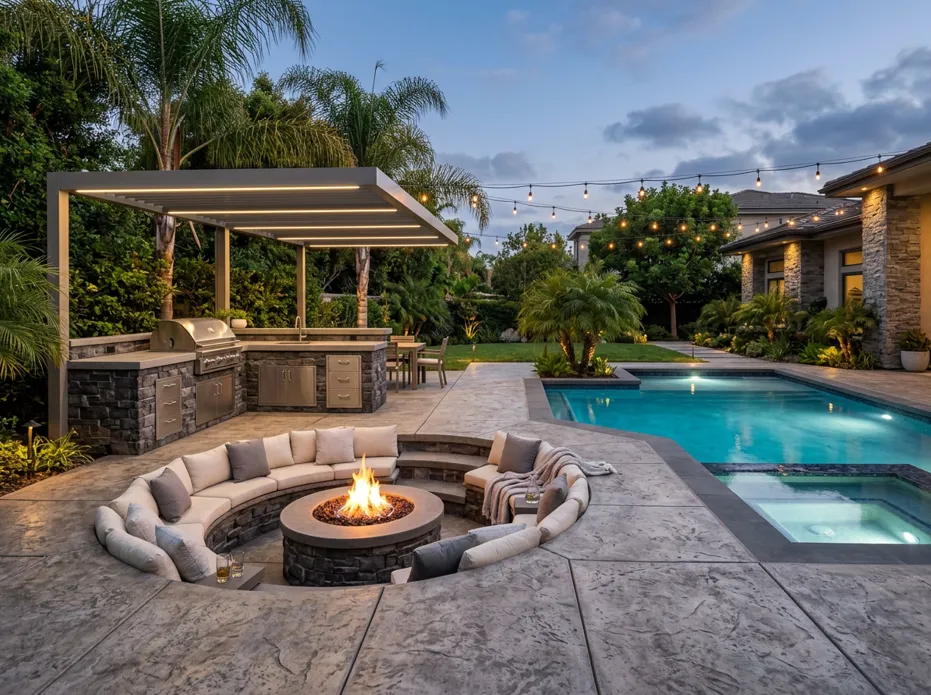
Integrating Fire Pits and Outdoor Kitchens into Backyard Upgrades: Pools and Concrete Patios
Few features add as much ambiance and utility to a backyard as fire pits and outdoor kitchens. A well-placed fire pit becomes a natural gathering spot, extending the usability of your patio into cooler evenings. Options range from wood-burning pits to convenient gas fire features that ignite with the flick of a switch, offering clean burning and precise control. When designing, ensure adequate clearance zones from structures and flammable materials for safety.
Outdoor kitchens elevate entertaining to a new level. They can range from simple grilling stations to elaborate culinary centers with sinks, refrigerators, and pizza ovens. Modular cabinetry designed for outdoor use provides storage and a cohesive look, while selecting durable outdoor appliances is crucial for longevity. Proper utility connections for gas, water, and electricity must be planned early in the design phase to ensure functionality and safety. Positioning an outdoor kitchen near the pool can create a seamless entertaining flow, allowing guests to move easily between swimming and dining.
Enhancing Privacy, Shade Structures, and Permanent LED Lighting
Privacy and comfort are paramount for a truly relaxing backyard oasis. Integrating privacy berms—raised mounds of earth planted with trees and shrubs—can create natural screening from neighbors and street views. Complementary vertical plantings like tall hedges or climbing vines on pergolas also offer effective and aesthetically pleasing privacy solutions.
Shade structures are essential for comfort during sunny days. Modern pergolas, gazebos, or even retractable awnings provide relief from the sun, making the patio usable for longer periods. These structures can also serve as architectural focal points, adding visual interest and defining outdoor rooms.
Finally, permanent LED lighting transforms your backyard after dusk. Low-voltage LED fixtures can illuminate pathways, highlight landscaping features, and create a warm, inviting ambiance around the pool and patio. With automated controls, you can program lighting scenes, set timers, and even control them remotely, enhancing both convenience and security. Thoughtful lighting design ensures safety around the pool while creating a magical evening atmosphere.
Durability, Maintenance, and Common Installation Mistakes to Avoid
Ensuring the longevity and safety of your pool and concrete patio upgrade requires attention to durability, proactive maintenance, and awareness of common installation pitfalls. Issues like soil erosion, base settlement, and the effects of freeze-thaw mitigation can compromise structural integrity over time. Furthermore, concrete surfaces around pools must withstand constant exposure to water and chlorine resistance is key. Regular joint maintenance helps prevent cracks and keeps the patio looking its best. Addressing these factors from the outset is crucial for a lasting investment.
Preventing Structural Settling and Grading Errors in Backyard Upgrades: Pools and Concrete Patios
One of the most critical aspects of concrete patio installation, especially around a pool, is proper ground preparation. Inadequate subgrade compaction is a leading cause of patio settlement and cracking. The soil beneath the patio must be thoroughly compacted to create a stable, unyielding base that can support the weight of the concrete and any subsequent loads. Without this, uneven settling can lead to structural damage and costly repairs.
Equally important is correct slope direction and grading. The patio must be sloped away from the house and the pool structure at a minimum of 1/4 inch per foot to ensure proper drainage. Incorrect grading can lead to water pooling on the patio, against the house foundation, or even back into the pool, causing water damage, erosion, and potential safety hazards. Effective moisture control through proper drainage prevents hydrostatic pressure build-up and subgrade saturation.
For existing concrete that has settled or become uneven, specialized solutions exist. Technologies like fast foam-injection leveling can efficiently raise and stabilize sunken concrete slabs without the need for demolition and repouring, offering a less invasive and often more cost-effective repair. This method is particularly useful for correcting uneven sections of a pool deck or patio that might otherwise pose tripping hazards.
Finally, using appropriate bond breakers and ensuring proper deck leveling during initial installation is vital. Bond breakers prevent the concrete from adhering to adjacent structures where movement is expected, while meticulous leveling ensures a smooth, even surface across the entire patio.
Frequently Asked Questions About Pool and Patio Upgrades
Homeowners often have many questions when considering such a significant investment. Here, we address some of the most common inquiries regarding pool and concrete patio upgrades.
How much does a turnkey pool and concrete patio project cost in 2026?
The cost of a turnkey pool and concrete patio project in 2026 can vary widely based on several factors, including location, size, materials, and complexity. For a new inground pool, gunite shells typically range from $95,000 to $225,000+. When you factor in the surrounding hardscape square-footage (concrete patio), electrical connections for pool equipment and patio features, safety fencing, and extensive site preparation (excavation, soil work, utility relocation), a full turnkey project can range from $120,000 to $375,000+. Luxury projects with spas, extensive outdoor kitchens, and high-end finishes can easily exceed $500,000. It’s crucial to get detailed quotes that itemize all components.
What concrete finish provides the best slip resistance around pools?
For optimal slip resistance around pools, several concrete finishes are highly recommended. A broom finish is a classic and effective choice, creating a textured surface with fine grooves. Exposed aggregate is also excellent, as the exposed stones provide natural traction. For stamped concrete, choosing patterns with inherent texture, such as those mimicking natural stone, is better than smooth patterns. Incorporating anti-skid additives into the sealer can further enhance grip on any concrete finish. Lighter colors and textured finishes also contribute to heat reduction, making the surface more comfortable for bare feet.
Can a new concrete patio be tied into an existing pool deck?
Yes, a new concrete patio can be tied into an existing pool deck, but it requires careful planning to ensure structural integrity and a seamless appearance. The most critical element is managing the joint between the old and new concrete. An expansion foam or isolation joint must be used to allow for independent movement, preventing cracking due to temperature fluctuations. Ensuring elevation alignment is crucial for a smooth transition and to prevent tripping hazards. Often, a decorative transition border can be used to visually bridge the two surfaces. Proper soil compaction for the new patio section and ensuring structural isolation from the existing deck are key to preventing future settlement or cracking.
Conclusion
Upgrading your backyard with a thoughtfully designed pool and concrete patio is an investment that pays dividends in lifestyle enhancement and property value. From the initial site assessment and meticulous planning of seamless transitions to selecting durable, safe finishes and integrating high-impact features, every decision contributes to creating your ultimate outdoor sanctuary.
By understanding cost factors, prioritizing durability, and avoiding common installation mistakes, homeowners can achieve a cohesive design that offers long-term durability and maximizes property value. Whether you envision tranquil mornings by the water or lively evenings of outdoor entertainment, the synergy between a well-crafted pool and a functional concrete patio transforms your backyard into a cherished extension of your home.


