In today’s competitive construction market, simply having a website is not enough. The time when word-of-mouth and Yellow Pages ads did most of the work is over. Now, about 87% of people start looking for services online, and around 89% of decision-makers check a company’s online presence before they even reach out.
So how does user-friendly website design help construction companies win more projects? It creates trust right away, shows your skills clearly, and turns visitors into real leads. Your website is more than an online flyer; it’s your digital home base, and it can directly affect revenue by bringing in and engaging new clients.
For companies that want to stand out, investing in professional Construction Company Website Design is no longer optional-it’s a must for growth and long-term success.
How User-Friendly Website Design Impacts Project Acquisition for Construction Companies
What Does User-Friendly Web Design Mean in Construction?
For construction companies, user-friendly web design means building a site that looks good and is also easy to use. People should be able to move through project photos, read service details, and find the contact form quickly, without getting lost. The layout, buttons, and calls-to-action should be clear and simple, showing the same kind of order and professionalism clients expect from a contractor.
A clear and well-organized website often reflects how a company runs projects in real life. If the site feels straightforward and easy to work with, it quietly tells visitors the company is likely the same way on a job site. This basic usability is the core of strong construction website design, and it helps reassure clients that their investment is safe.
Key Differences Between Generic and Industry-Specific Website Design
A generic website may share basic info and a phone number, but a construction-focused website goes further by matching how construction clients think and choose a contractor. Many general sites don’t show the proof construction buyers want. A construction website should work like an active portfolio, with strong visuals like before-and-after galleries, drone shots, and time-lapse videos that show quality and progress.
Industry-focused design also includes trust items that matter in construction, like certifications, safety records, and insurance details. It should feature case studies that explain the project size, issues that came up, how they were solved, and how the budget and schedule were handled. These details speak directly to what construction clients care about and help your company stand apart from competitors with a basic, less convincing site.
Benefits of User-Friendly Website Design for Construction Firms
Increases Credibility and Trust With Potential Clients
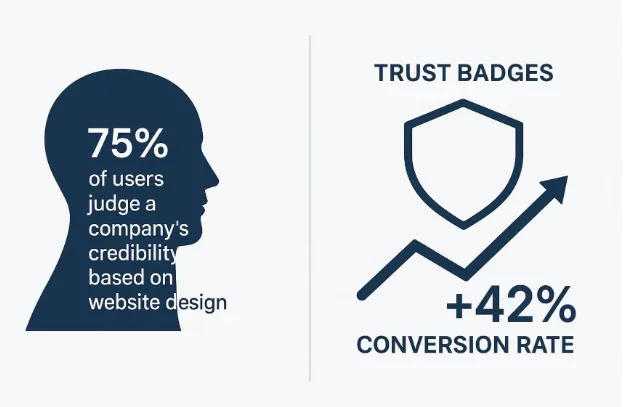
In construction, trust and skill matter a lot, and your website is often where people form their opinion. Stanford University research shows that about 75% of users judge a company’s credibility based on website design. That means a clean layout, modern look, and smooth performance are not “nice extras”-they send signals of professionalism, stability, and careful work. In fact, 94% of first impressions are connected to design, which shows how fast visitors make up their minds.
When your site clearly shows licensing, certifications, and insurance, it helps visitors feel safer choosing you. Adding testimonials, supplier partnerships, and memberships in industry groups can build even more confidence. Research also shows 81% of consumers need to trust a brand before buying, and trust badges can increase conversions by up to 42%. Put together, these items make it easier for a visitor to contact you because they feel they’re dealing with a reliable contractor.
Improves Client Conversion Rates
A user-friendly construction website should make it easy for someone to go from “just looking” to “asking for a quote.” Clear calls-to-action (CTAs) like “Request a Quote” or “Schedule a Consultation” should guide visitors step by step. HubSpot reports that companies that improve their contact pages can see up to a 50% increase in leads.
A strong project portfolio also helps convert visitors. Sites with detailed portfolios get 47% more inquiries than those without.
Speed and mobile performance matter too: Google reports that 53% of mobile users leave a site if it takes more than three seconds to load. Fast pages, simple menus, and shorter forms (reducing form fields can increase submissions by 50%) remove friction and make it more likely that visitors turn into qualified leads.
Supports Business Growth and Project Pipeline
When your website is easy to use, it can work like a full-time salesperson that never sleeps. It can also bring in better leads-people looking for larger or higher-value projects. A strong website presentation can help your company justify higher pricing, instead of competing mainly on being the cheapest option.
With more than 750,000 construction businesses in the United States, standing out matters. Competitive construction websites with strong project galleries and testimonials can increase commercial project inquiries by up to 300%, which helps you get shortlisted more often. A good website also supports repeat business by building trust over time, leading to long-term clients and referrals. In the end, a well-made website becomes a trackable business tool that supports steady growth.
Essential Features of a User-Friendly Construction Website
Simple and Intuitive Navigation
Navigation is one of the most important parts of a user-friendly site. For construction companies, this means a clear menu that helps people find information fast. Simple labels like “Services,” “About Us,” “Projects,” and “Contact” work better than vague terms. A clean navigation bar (usually at the top or side) keeps visitors from feeling overwhelmed and helps them quickly find what you do, what you’ve built, and how to reach you. A site that’s easy to move through also suggests the company is organized-something construction clients value highly.
High-Quality Visuals and Project Portfolios
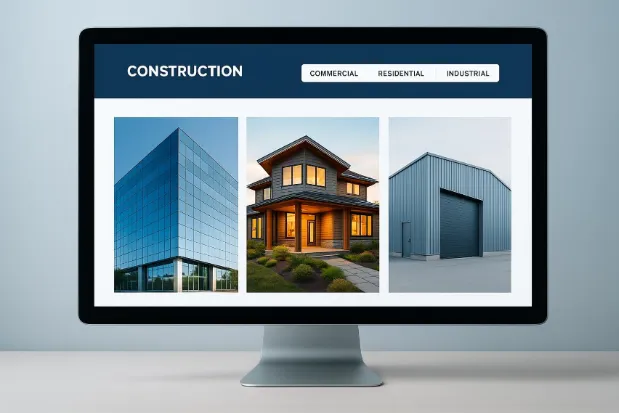
In construction, proof matters. Your project portfolio is often your strongest sales asset because it shows your work. It should include professional photos of completed projects, with before-and-after images when possible. Drone footage, time-lapse videos, and technical drawings can also help show your full capabilities. Projects should be grouped in a clear way (commercial, residential, industrial) with filters, and each project should include details like:
- Project scope
- Main challenges and how you solved them
- Timeline and schedule performance
- Budget performance
- Client testimonial (if available)
Because galleries can be heavy, image files should be optimized for speed (often under 500kb while keeping good quality). Articles with visuals get 94% more views, which shows how much images help keep people interested.
Clear Calls-To-Action and Contact Options
A website can look great, but it fails if people don’t know what to do next. CTAs should be clear and easy to spot, guiding visitors to take action. Buttons like “Request a Quote,” “Get a Project Estimate,” or “Schedule a Consultation” should appear in key spots, such as near the top of the homepage and at the end of project pages. Also, contact options should be easy to find on every page, including forms, phone numbers, and email addresses (and emergency contact details if relevant). This reduces delays and makes it easier for prospects to contact you.
Mobile Responsiveness and Fast Load Times
More than half of web traffic comes from mobile devices, so responsive design is required. Your site needs to work well on phones and tablets, with layouts that adjust automatically for different screens. Speed matters just as much. Research shows 53% of mobile visitors leave if a page takes more than three seconds to load. To keep your site fast, you should optimize images, reduce heavy scripts, and use browser caching. Faster sites also tend to rank better in search results.
Trust Signals Such as Testimonials and Certifications
Construction clients want confidence before they reach out. Trust signals across your website can influence decisions a lot. This can include:
- Testimonials with names, project photos, and specific results
- Certifications, safety records, and insurance info (with downloadable files if helpful)
- Memberships in professional groups
- Logos of past clients (with permission), supported by short project summaries
These details help visitors see your track record and make it easier to picture working with you.
Mobile Optimization and Accessibility in Construction Web Design
Mobile-First Design Principles for Construction Clients
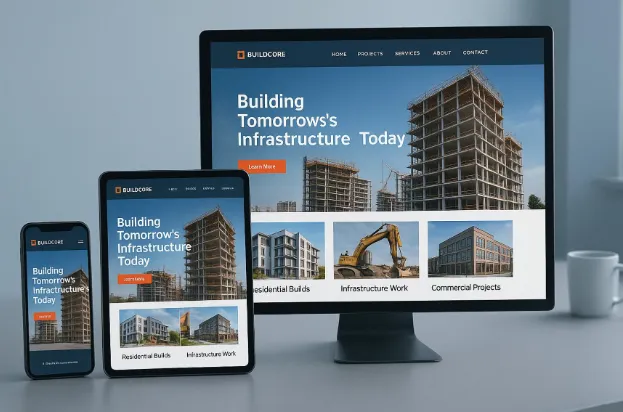
Mobile-first design matters a lot in construction because 68% of commercial clients now do their first contractor research on mobile. Mobile-first means designing for smaller screens first, so key items like service info, contact forms, and portfolios work smoothly on phones.
Many people in construction also check websites while on-site or traveling, so mobile usability is a real need. This approach also fits Google’s mobile-first indexing, which can improve SEO and local visibility, especially when using local keywords like “commercial construction in [city name].”
Ensuring Website Accessibility and Industry Compliance
Accessibility is another important part of user-friendly design and is often missed. Construction websites should follow accessibility guidelines (such as ADA compliance) so people with disabilities can use the site. Many commercial clients care about this because it shows ethical behavior and legal awareness.
Accessibility features can also improve the experience for everyone by making content clearer and navigation easier. These improvements often support better search rankings and higher conversion rates too. It shows your company takes responsibility seriously and thinks about all users.
How Professional Website Design Builds Trust and Authority
Showcasing Expertise With Case Studies and Completed Projects
A professional website is a strong place to show your company’s skill and build authority. Instead of only listing services, use project portfolios and case studies to explain what you can do. Interactive galleries, before-and-after comparisons, and media like high-resolution photos, drone footage, time-lapse videos, and technical drawings give real evidence of quality work.
Commercial clients often want details before making big decisions, and case studies can provide them. When you include scope, specs, schedule results, and safety records, you show a history of success that speaks to architects, engineers, facility managers, and executives.
Using Transparency and Communication Tools To Create Confidence
Construction projects involve many moving parts, so clear communication matters. Your website should reflect that with detailed service descriptions, simple explanations of how you work, and easy-to-find contact info.
Features like client portals with progress updates, or signs of responsive customer service, can help build confidence. Companies that show strong communication on their website are often seen as better choices for complex projects that need coordination across many people. This shows operational skill before any work begins, especially when supported by a clear digital presence shaped with a specialist like BuiltFor Studio.
Establishing Credibility With Awards, Affiliations, and Client Logos
To strengthen trust, a construction website should include credibility markers in the right places. Showing certifications, awards, and professional memberships highlights your commitment to quality and industry standards.
Client logos can also help, but they work best when paired with short project notes that explain what you did and what the result was. Always get permission before using logos or project information.
Spreading these trust signals across the site (instead of placing everything on one “About Us” page) keeps the message consistent. For example, show key certifications on the homepage, and include related testimonials or case studies on service pages.
Optimizing the Client Journey: From First Visit to Project Inquiry
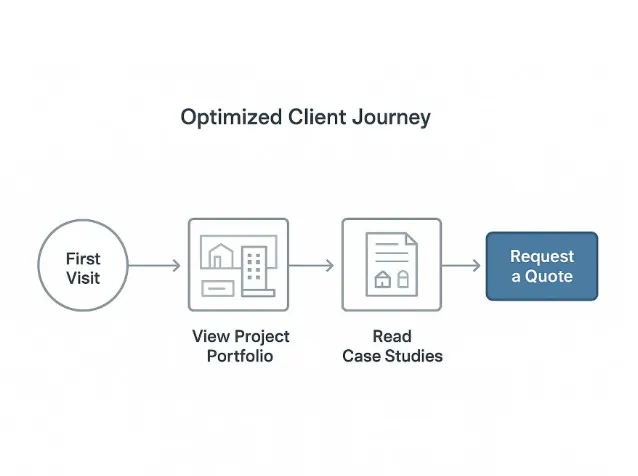
Streamlining the User Flow To Guide Client Decisions
The path a visitor takes on your website should feel smooth and planned, like a well-run job. A user-friendly design simplifies the steps from the first visit to the point where they contact you. This means keeping content clear and organized so each click helps visitors learn more about your work and how it fits their needs. Easy navigation and a clear page structure help move people from browsing to serious interest.
Lead Generation Forms and Proposal Request Features
To capture leads, your construction website needs more than a basic contact page. Place CTAs like “Request a Quote” or “Schedule a Consultation” on the pages where they make the most sense. You can also offer downloadable resources (like planning checklists or sample timelines) in exchange for contact details-these “lead magnets” can increase conversions by up to 15%.
Forms should be simple while still collecting the basics. In many cases, this is enough:
| Form Field | Why it matters |
| Name | So you know who to respond to |
| For follow-up and sending estimates | |
| Phone number | For quick scheduling and clarifying details |
| Project type | Helps you route the lead and respond accurately |
For best results, try to respond to form submissions within five minutes. Studies show leads contacted that quickly are 9 times more likely to convert.
Personalizing Content for Commercial, Residential, and Specialized Sectors
To improve the client journey even more, you can create content for different types of customers. Build separate landing pages for each market you serve, like healthcare construction, schools, or industrial work. These pages can rank better for specific searches (like “industrial construction in [city name]”) and speak directly to what that audience cares about.
Add matching case studies, documents, and testimonials for each sector. This helps attract better-fit leads and reduce inquiries that are outside your focus, because visitors quickly see what you specialize in and whether you’re the right match.
Measuring Website Performance for Project Acquisition
Key Analytics: Traffic, Engagement, Inquiries, and Conversions
If you treat your website like a real business tool, you should track how it performs. Key metrics show how well your site brings in and converts leads. Useful numbers include website traffic, engagement (time on page, bounce rate), lead actions (form fills, downloads), and conversion rates from inquiry to awarded project. Google Analytics helps you see what visitors do, which pages work best, and where people leave.
Connecting your website to a construction-focused CRM can also improve lead tracking and help manage your sales pipeline. Data-based decisions can increase conversion rates by about 30% on average.
Adapting Based on Performance Data and Industry Trends
Websites are never “done.” You should keep improving based on data and changes in the market. Track which CTAs get clicks, which pages create leads, and where visitors drop off. Use that information to adjust button placement, page layout, and wording.
Also review competitor sites regularly to see what’s becoming common and what opportunities they may be missing. Strong companies set aside budget for ongoing updates based on feedback, new tools, and industry changes to keep the site useful and effective for winning projects.
Key Takeaways for Construction Companies Investing in User-Friendly Website Design
For construction companies working in a digital-first market, a user-friendly website is not just marketing-it’s the digital setup that shapes your company’s future. It works as your online headquarters, helping form first impressions, build client confidence, and bring in project inquiries day and night. Companies that do well in the future will be the ones that take their website seriously and build a clear advantage online now.
This is not a one-time task. It’s ongoing work to show your skills, communicate clearly, and improve each step a client takes from first visit to contact. By focusing on professional design, strong portfolios, and an easy experience, construction companies can attract higher-quality opportunities and build long-term client relationships. Online is where trust often starts and where clients first judge your work-so your website may be your strongest tool for winning the projects you want.
Frequently Asked Questions
What is the ROI of investing in user-friendly website design for construction companies?
The ROI of a user-friendly website in construction can be strong and easy to measure. It’s not only about looks-it supports real growth. Companies that invest in professional design often get more leads, attract higher-value projects, and improve how they are seen in the market.
Poor website design can cost construction companies around 40% of potential leads, often lost in the first three seconds when visitors judge credibility. A strong website reduces those losses and helps turn prospects into inquiries. It also helps firms compete based on skill, reliability, and specialized work instead of only price, leading to more projects and stronger client relationships over time.
How does a poor website hurt project opportunities?
An outdated or confusing website can seriously reduce project opportunities. It can damage trust almost instantly-75% of users judge trustworthiness based on design, and 94% of first impressions are tied to design. A slow site increases bounce rates, and more than half of users leave if a page takes longer than three seconds to load. That means potential clients may leave before they even see your work.
If CTAs are unclear or contact info is hard to find, you lose leads directly. And if your site doesn’t show your portfolio and results well, it becomes harder to stand out in a crowded market. Over time, a poor website can block growth and cost an estimated 40% of potential inquiries.