Table of Contents
- Start With the Site
- Plan for How the Space Will Be Used
- Create Clear Outdoor Zones
- Choose a Strong Foundation
- Use Plants That Fit the Setting
- Manage Water Before It Becomes a Problem
- Add Shade, Lighting, and Warmth
- Build a Simple Care Plan
- Avoid Common Planning Mistakes
- Questions Homeowners Often Ask
A well-planned yard can make everyday life at home more comfortable, whether it is used for quiet coffee, family meals, gardening, or evenings with friends. For homeowners considering Northern Virginia landscapes and hardscapes, the best results start with a plan that accounts for the property’s slope, sunlight, drainage patterns, and the way the space will actually be used.
In Haymarket, Virginia, a water-smart outdoor living area does not have to mean a sparse or overly formal design. It means creating useful spaces, selecting plants for the conditions they will face, and directing water thoughtfully so the yard is easier to enjoy and maintain through changing seasons.
1. Start with the Site
Resist the urge to begin by choosing patio furniture, pavers, or plants. First, observe the property. Measure the intended project area, note doors and walkways, identify existing trees, and mark places that receive strong sun, deep shade, or standing water after rain.
Pay particular attention to grade. A low area that regularly holds water may be a poor location for a dining set, but it could become a planting bed with moisture-tolerant plants. Working with natural drainage is generally more practical than forcing water toward another part of the property.
2. Plan for How the Space Will Be Used
Write down the three outdoor activities that matter most before drawing a layout. A household that enjoys grilling and shared meals needs clear access between the kitchen, cooking area, and dining table. A household focused on gardening may need wider paths, hose access, and room for tools.
Consider who will use the space, including children, pets, older relatives, and guests. Leave practical room for circulation, storage, maintenance, and future changes instead of filling every open area on the first day.
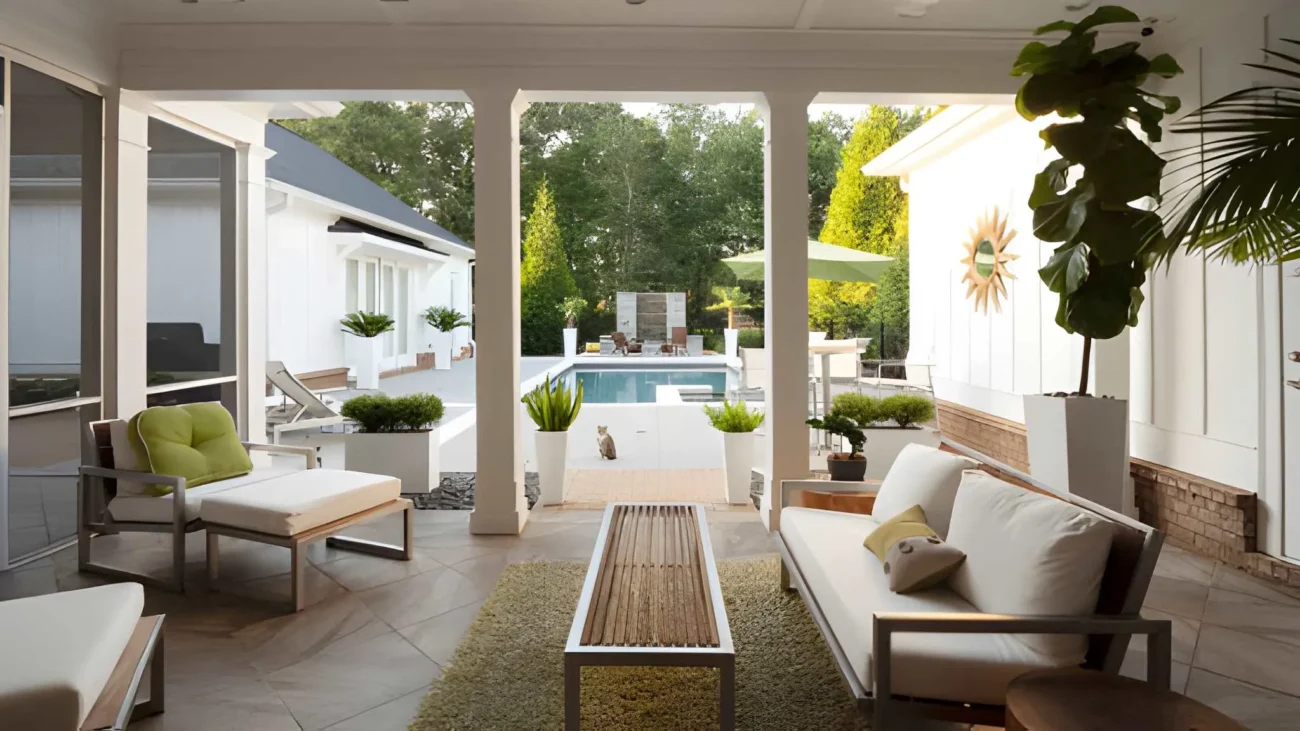
Photorealistic Haymarket, Virginia backyard at golden hour, showing a thoughtfully planned outdoor living area with a modest stone patio, comfortable seating, layered native plantings, clear walking space, and gentle natural grading that directs rainwater toward a lush garden bed; warm directional sunlight, soft shadows, inviting residential atmosphere, realistic landscaping photography.
3. Create Clear Outdoor Zones
Dividing a yard into simple zones can make even a compact space feel organized. The boundaries do not need to be walls. A change in paving, a planting border, lighting, or furniture placement can signal a new purpose while keeping the overall yard connected.
- Dining zone: Keep it reasonably close to the kitchen or food-preparation area.
- Lounge zone: Aim seating toward a pleasant view and away from busy travel paths.
- Cooking zone: Leave adequate clearance around grills and counters.
- Garden zone: Group plants with similar sun and watering needs.
- Activity zone: Preserve open space for play, pets, or casual recreation.
4. Choose a Strong Foundation
The right surface depends on access, grade, drainage, maintenance expectations, and the home’s character. Ground-level patios can create a stable setting for dining and gathering. Decks can help bridge elevation changes near the house. Stone or paver paths can connect separate areas without turning the entire yard into hard surface.
Where drainage is a concern, consider surfaces that allow some water to pass through rather than sending all rainfall toward one low point. Whatever material is selected, a durable base and thoughtful grading are essential to long-term performance.
5. Use Plants That Fit the Setting
Choose plants for the conditions they will experience, not only for how they look at the garden center. Match sun-loving plants to sunny beds, reserve shade-tolerant choices for sheltered spots, and account for soil moisture, mature size, and access for watering.
Virginia Cooperative Extension recommends putting the right plant in the right place and beginning with a site analysis. Its guidance on incorporating native plants into the landscape also emphasizes grouping plants with compatible growing conditions and planning for long-term care.
A layered mix of trees, shrubs, perennials, grasses, and ground covers can provide structure throughout the year. Use plants in groups where possible, and avoid placing high-water choices in distant areas that are inconvenient to maintain.
6. Manage Water Before It Becomes a Problem
Water planning belongs at the beginning of the project. Identify where roof runoff lands, keep downspouts from directing water toward the foundation, and look for erosion along slopes or path edges. Mulch and healthy soil can help reduce evaporation and slow the force of rainfall across exposed planting beds.
Residential outdoor water use in the United States totals nearly 8 billion gallons per day, largely for landscape irrigation. The EPA’s recommendations for water-smart outdoor landscapes include watering appropriately, reducing runoff, and checking irrigation systems for leaks or overspray.
Create watering zones so plants with similar needs receive similar amounts of water. Inspect sprinkler heads periodically, adjust them when plants grow, and avoid irrigating pavement or siding.
7. Add Shade, Lighting, and Warmth
Comfort features should make the layout more useful, not overcrowded. Trees, umbrellas, pergolas, and shade panels can make seating areas more inviting during bright afternoons. Path lighting should support safe movement, while low-glare fixtures near dining and lounge areas can provide a calmer atmosphere after dark.
Consider weather-resistant furnishings and plan storage for cushions, tools, and seasonal items. If adding a fire feature, heater, or outdoor cooking equipment, allow appropriate clearance and follow manufacturer instructions and applicable local requirements.
8. Build a Simple Care Plan
Good design makes routine care easier. Leave access to irrigation controls and outdoor equipment, place higher-maintenance plants near paths, and avoid narrow spaces that are difficult to weed or mulch. New plantings typically need closer attention while they establish.
- Spring: Inspect drainage, refresh mulch, prune as appropriate, and check irrigation components.
- Summer: Monitor soil moisture, remove weeds, and adjust watering for weather conditions.
- Fall: Clear debris, protect or store furnishings, and review areas affected by heavy rain.
- Winter: Store vulnerable items, watch for drainage issues, and plan next season’s improvements.
9. Avoid Common Planning Mistakes
Costly revisions often begin with skipped planning steps. Common issues include buying furniture before measuring, planting without checking mature size, making paths too narrow, using one irrigation schedule for every plant, and ignoring where water moves after storms.
A phased plan is often the smarter choice when the full vision exceeds the current budget. Complete drainage corrections and foundational work first, then add planting, lighting, and decorative features over time.
10. Questions Homeowners Often Ask
How much space is needed for an outdoor living area?
Even a small yard can support useful outdoor seating when the space is measured carefully and the design prioritizes a few important functions.
Are native plants always the best choice?
Native plants can be valuable additions, but every selection should still fit the specific sunlight, soil, moisture, mature size, and design needs of the planting location.
Should a patio or deck come first?
The answer depends on elevation, access from the house, drainage, intended use, and the condition of the site.
How can a yard use less water?
Start with plant selection, mulch, healthy soil, watering zones, leak checks, and irrigation practices that place water where plants can use it.
What should be planned before work begins?
Create a site map, list priorities, establish a budget, review drainage, choose materials, outline planting areas, and decide how the finished space will be maintained.
Conclusion
A water-smart outdoor living space in Haymarket does not need to be oversized or complicated. Start with the site, design around real household routines, plan for water before building, and choose materials and plants that suit the setting. That measured approach can create an outdoor area that feels welcoming, functions well, and remains manageable season after season.