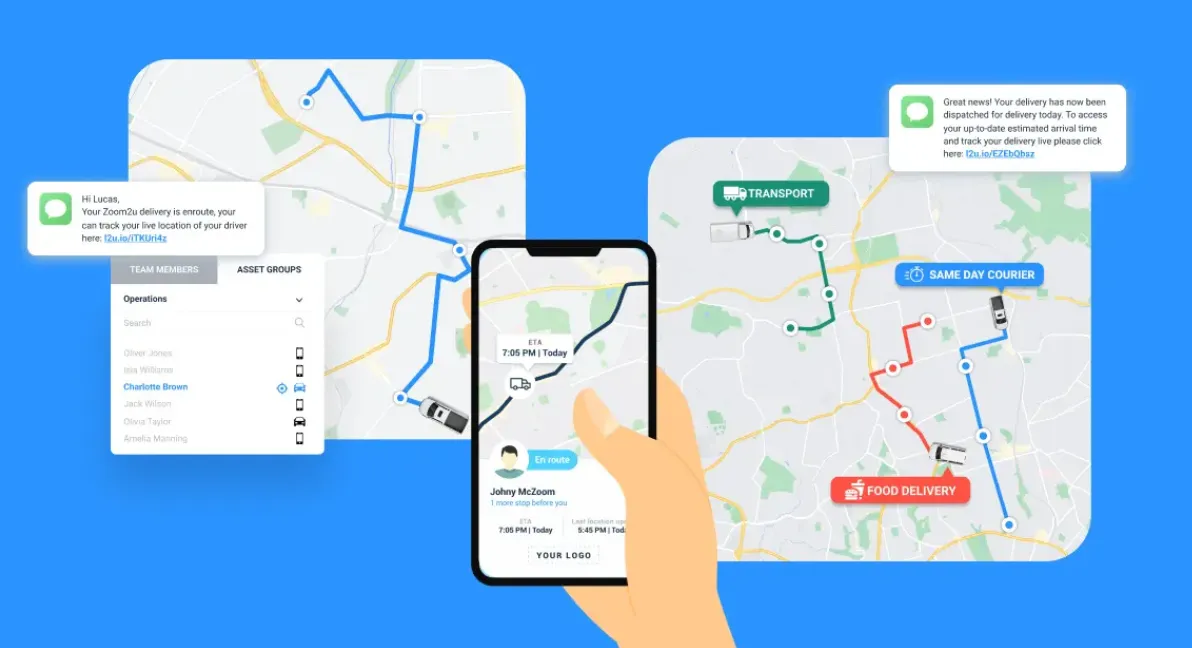
Delivery networks lose money in ways that rarely show up as a single line item on a budget report. Fuel overspend, driver overtime, failed deliveries, and vehicle wear accumulate quietly until margins shrink without an obvious cause.
That is where delivery route planning software addresses this problem by exposing costs that manual scheduling and fixed routes tend to hide. It replaces guesswork with data-driven planning, giving dispatchers a clear view of where money leaks out of daily operations. Fleet managers under pressure to control expenses and meet tighter delivery windows must first understand where these hidden costs originate.
Let’s examine the specific cost categories that disappear once route planning shifts from manual effort to software-driven precision.
Fuel Costs Tied to Inefficient Route Sequencing
Fuel spend often reflects route inefficiency rather than distance traveled or current fuel prices alone. Backtracking, poorly sequenced stops, and unnecessary idle time all inflate consumption without adding value to any delivery.
Fleets that skip delivery route planning software often accept these losses as a fixed cost of doing business. Delivery route planning software recalculates stop sequences using real road conditions and traffic patterns instead of fixed maps drawn weeks in advance.
This reduces total miles driven per route and cuts the idle time drivers spend waiting between poorly ordered stops. Fleets running manual routes typically discover that a meaningful share of their fuel budget pays for inefficiency rather than actual delivery distance.
Overtime Pay Generated by Manual Scheduling Errors
Manual route planning rarely accounts for real-time traffic, weather, or last-minute order changes, which pushes routes past their planned duration. Every extra hour on the road becomes overtime pay that was never budgeted. Delivery route planning software builds routes around realistic time estimates and adjusts automatically when conditions change mid-shift.
Dispatchers gain visibility into which routes are trending long before drivers clock excessive hours, allowing corrections before overtime costs accumulate. Over a full fleet and a full month, these small daily corrections translate into meaningful labor savings.
Redelivery Costs from Failed Delivery Attempts
A failed delivery attempt costs more than the fuel and labor spent driving to an empty address. It also triggers a second attempt, additional customer service contact, and a delay that damages customer trust in the brand. Delivery route planning software reduces failed attempts by sequencing deliveries around confirmed availability windows and accurate address details.
Fewer failed attempts mean fewer redelivery trips, which directly lowers the per-stop cost across the entire network. This compounding effect becomes significant once delivery volume scales into the hundreds or thousands of stops per day.
Vehicle Maintenance Costs from Suboptimal Routing
Constant stop-and-go driving and routes packed with unnecessary turns accelerate wear on brakes, tires, and engines. Delivery route planning software designs routes that minimize abrupt braking and unnecessary detours, which extends the service life of fleet vehicles.
Lower maintenance frequency means fewer vehicles pulled out of service for repairs and a longer replacement cycle for the fleet overall. Fleet managers who track maintenance spend against route quality consistently find a direct correlation between route efficiency and repair frequency.
Customer Service Costs from Delivery Delays
Every missed delivery window generates a support ticket, a phone call, or a chat inquiry that requires staff time to resolve. These costs rarely appear in logistics budgets, yet they scale directly with delivery delay frequency. This is one area where delivery route planning software produces measurable savings quickly.
Delivery route planning software improves on-time performance by building realistic arrival windows and adjusting them in real time. Customers who receive accurate updates rarely contact support, which reduces the staffing needed to handle delivery-related inquiries. This shift also frees customer service teams to focus on higher value issues instead of routine status checks.
Driver Turnover Costs Linked to Poor Route Design
Drivers assigned to disorganized, exhausting routes experience higher stress and lower job satisfaction, which contributes directly to turnover. Replacing and retraining drivers carries a substantial cost that many fleets underestimate. Delivery route planning software creates balanced, realistic routes that reduce unnecessary driving time and unpaid waiting between stops.
Drivers working with predictable, well-structured routes report higher satisfaction and are more likely to stay with the same fleet long-term. Lower turnover reduces recruiting and training expenses while preserving institutional knowledge across the driver workforce.
Implementation Best Practices for Rolling Out Delivery Route Planning Software
Realizing these savings depends heavily on how the rollout is managed, beyond simply which platform gets selected. Start with the highest volume routes first, since these generate the fastest and most visible return on the investment.
Validate address, geofence, and delivery window data before full deployment, because inaccurate location data undermines route quality regardless of platform sophistication. Train dispatchers and drivers on the new workflow rather than assuming the interface alone will drive adoption.
Set a recurring review cadence, ideally monthly, to compare route performance against fuel, labor, and redelivery costs before and after the change. Fleets that treat rollout as a structured project, rather than a simple switch, capture more of the available savings within months.
Why Delivery Route Planning Software Deserves a Place in Every Cost Review
Hidden costs rarely announce themselves, which is exactly why they persist across delivery networks that rely on manual planning methods. Delivery route planning software brings these costs into view by linking route quality to fuel spend, labor hours, redelivery rates, and maintenance.
Fleets that treat routing as a core cost control function outperform those that treat it as an afterthought. Working with technology partners such as FarEye gives fleet managers the data and automation needed to close these gaps systematically.
None of these gains materialize automatically, which is why rollout discipline matters as much as the underlying technology. Reviewing route planning software as part of a regular cost audit, instead of a one-time upgrade, protects long-term margins. Fleets that pair the right platform with a structured implementation plan see the clearest and most durable return on their investment.


