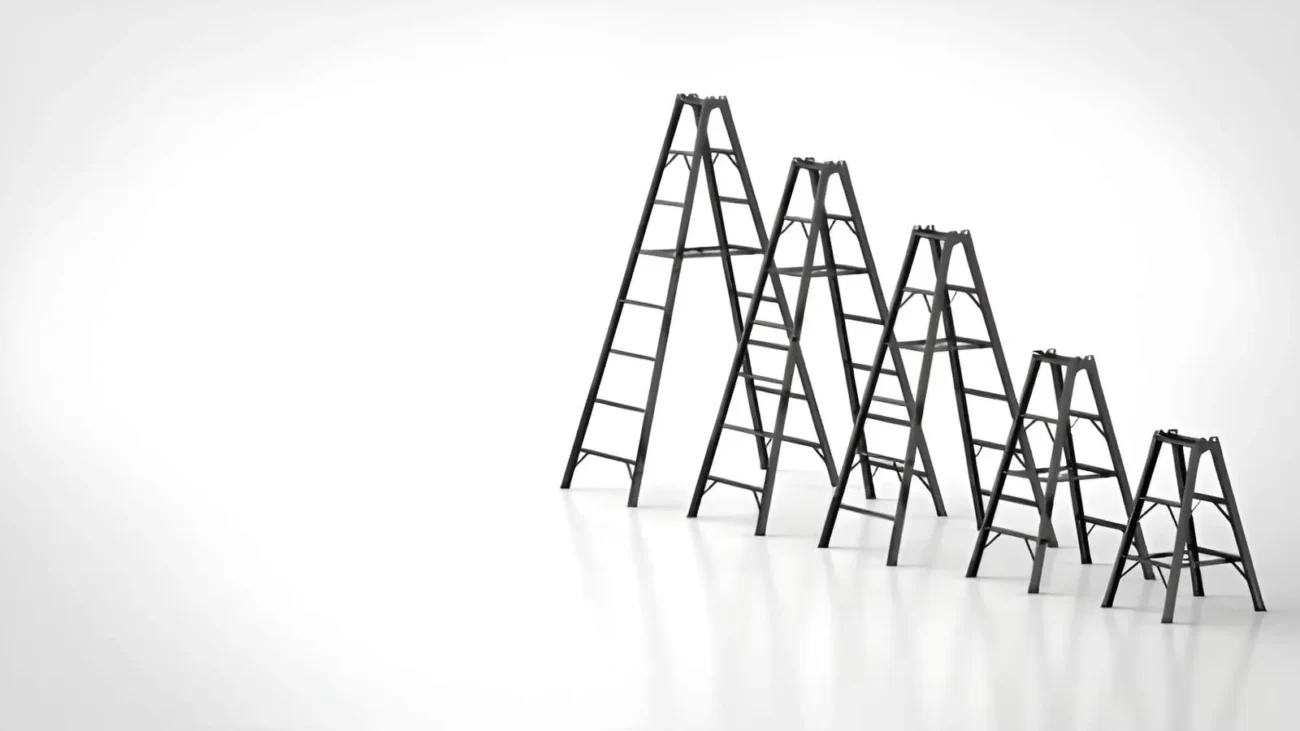
A ladder used occasionally around the home has a relatively straightforward job to do. It may be brought out to change a light fitting, clear a gutter or reach a high shelf before being stored away again. In a warehouse, factory, maintenance facility or construction environment, the expectations are very different. A ladder may be used repeatedly throughout the day, transported between locations, exposed to knocks, dirt and changing weather conditions, and expected to remain stable while carrying both a worker and their equipment. This is why heavy duty aluminum ladders are designed around a much more demanding set of requirements than their lighter domestic counterparts. Strength is important, but so are stability, resistance to wear, ease of handling and the ability to perform consistently after years of regular use.
The difference begins with the structure itself. Industrial ladders are not simply domestic ladders made from thicker pieces of metal. Their design has to account for how forces move through the ladder when somebody climbs, reaches, changes position or carries tools. Every rung, rail, joint and connection contributes to the overall behaviour of the structure. Engineers therefore have to consider both the weight the ladder is expected to support and the repeated stresses it will experience over its working life.
Aluminium is particularly well suited to this type of equipment because it combines relatively low weight with useful structural strength. A steel ladder may be extremely strong, but its additional mass can make frequent movement inconvenient. This becomes important in workplaces where a ladder might be repositioned dozens of times during a shift. Reducing unnecessary weight can make handling easier without automatically sacrificing the capacity required for professional use.
That balance, however, depends heavily on the shape and thickness of the aluminium sections used. The side rails of an industrial ladder are often formed into engineered profiles rather than simple flat strips. These profiles allow the material to resist bending and twisting while keeping overall weight under control. Manufacturers can strengthen areas that experience the greatest forces without making every component unnecessarily heavy.
Rungs require similar attention. They need to withstand downward loading, but they must also resist movement at the point where they connect to the side rails. Repeated climbing can gradually place stress on these connections, particularly when users step near the outer edge of a rung rather than directly in its centre. For that reason, the method used to secure the rungs can be just as significant as the thickness of the rung itself.
There is another issue that is easy to overlook: a ladder rarely experiences perfectly even loading. A worker may have one foot higher than the other while reaching sideways, or they may carry a tool bag that places more weight on one side. The ladder must remain sufficiently rigid under these changing conditions. Excessive flexing may make the user feel unstable even if the ladder is technically capable of supporting the load.
Stability Starts at Ground Level
Much of ladder design is focused on what happens where the ladder meets the floor or ground. Strong rails and rungs offer limited protection if the feet cannot establish a secure contact with the surface underneath them.
Industrial environments present a wide range of floor conditions. A ladder may be positioned on smooth concrete in a warehouse one day and rough outdoor paving the next. Rubberised or high-grip feet are therefore commonly used to reduce unwanted movement. Their shape and surface area matter because the forces at the base of a ladder can be significant, particularly when a user climbs towards the upper sections.
Wider bases and stabiliser bars may also be incorporated into certain designs. Increasing the distance between contact points can improve resistance to sideways movement, although this has to be balanced against portability and the amount of floor space available. A very wide ladder may be stable in an open industrial unit but awkward in a narrow maintenance corridor.
The ladder’s geometry plays a role too. With stepladders, designers need to control the angle between the front and rear sections so that the ladder opens into a predictable and stable position. Locking mechanisms or spreader bars help prevent the legs from closing unexpectedly while in use.
For extension ladders, the considerations change. The ladder must remain rigid when extended while also allowing the sections to slide smoothly during adjustment. The overlap between sections becomes especially important because insufficient overlap can reduce structural stability.
Designed for Repeated Use Rather Than Occasional Loading
One of the biggest differences between domestic and industrial equipment is not necessarily the maximum load it can carry on a single occasion. It is how often it can cope with that load.
A ladder used by a maintenance team may experience thousands of climbing cycles during its working life. Each cycle creates relatively small amounts of stress within the materials and joints. Good industrial design accounts for this repeated loading rather than concentrating exclusively on the maximum weight printed on a specification sheet.
Durability also extends beyond structural strength. Hinges, locks, wheels, stabilisers and adjustment mechanisms all have to continue operating despite dust, moisture and general workplace grime. A mechanism that performs perfectly when new but becomes difficult to operate after months of exposure is of little value in a demanding setting.
This is why apparently minor components can have a disproportionate effect on the useful life of a ladder. Strong hinges, secure fasteners and well-protected moving parts may not attract much attention when equipment is purchased, yet these are often the areas that experience the greatest wear.
Portability Is Part of Industrial Design
It might seem logical to make a professional ladder as strong and substantial as possible, but excessive weight creates its own problems. Workers still have to move the equipment.
A ladder that is cumbersome may be dragged rather than carried correctly, knocked against walls and machinery or positioned less carefully because moving it again is inconvenient. Weight therefore becomes part of the safety equation rather than simply a question of convenience.
Aluminium helps designers manage this compromise. It allows relatively large structures to remain practical to transport, especially where ladders are moved around factories, depots or sites throughout the day. Some larger industrial models also incorporate wheels or lifting points to make repositioning easier.
The shape of the ladder when stored is another consideration. Folding designs, telescopic elements and compact platforms can help organisations make better use of limited storage space, but these features must not introduce unnecessary weakness or complicated mechanisms that are prone to damage.
Work Environments Influence the Final Design
There is no single industrial ladder design that is ideal for every setting. A warehouse picker may need broad steps and a platform because the user remains at height while handling products. A maintenance engineer may prioritise portability because the ladder must regularly be carried between different areas. Outdoor work introduces additional concerns such as uneven ground, moisture and exposure to the elements.
Even the shape of the steps can change depending on intended use. Wide treads provide greater comfort when someone is expected to remain on the ladder for longer periods, while conventional rungs may be perfectly suitable for shorter climbing tasks. Handrails, guardrails and working platforms can also become important where tasks require greater freedom of movement.
Manufacturers therefore design around intended use rather than treating load capacity as the only meaningful specification. Two ladders with similar maximum ratings may behave very differently in practice if one has been designed primarily for occasional access and the other for frequent industrial work.
The Details Determine How Well a Ladder Ages
A new ladder can feel strong and secure regardless of whether it has been designed for long-term professional use. The real test comes after months or years of handling.
Repeated transportation can damage corners and fittings. Dirt can enter moving parts. Feet can wear down. Joints can loosen and aluminium sections may become dented if equipment is dropped or struck. Good industrial design attempts to limit the effect these everyday events have on overall performance.
Inspection remains essential because no ladder is immune to damage. Even equipment designed for severe working environments should be checked regularly for loose components, damaged feet, bent rails, cracked fittings or unusual movement. The advantage of robust construction is not that maintenance becomes unnecessary, but that the equipment is better able to tolerate the normal stresses associated with professional use.
Ultimately, designing a ladder for demanding environments is a matter of balancing several competing requirements. It must be strong without being unnecessarily heavy, rigid without becoming difficult to transport, stable without occupying excessive space, and durable without becoming overly complicated.
That combination explains why professional ladder design involves considerably more engineering than simply increasing the amount of metal used. The most effective industrial ladders are those in which materials, geometry, connections and practical handling have all been considered together. When those elements are properly balanced, the result is equipment that can remain dependable through the repeated, often unforgiving conditions of everyday professional work.


