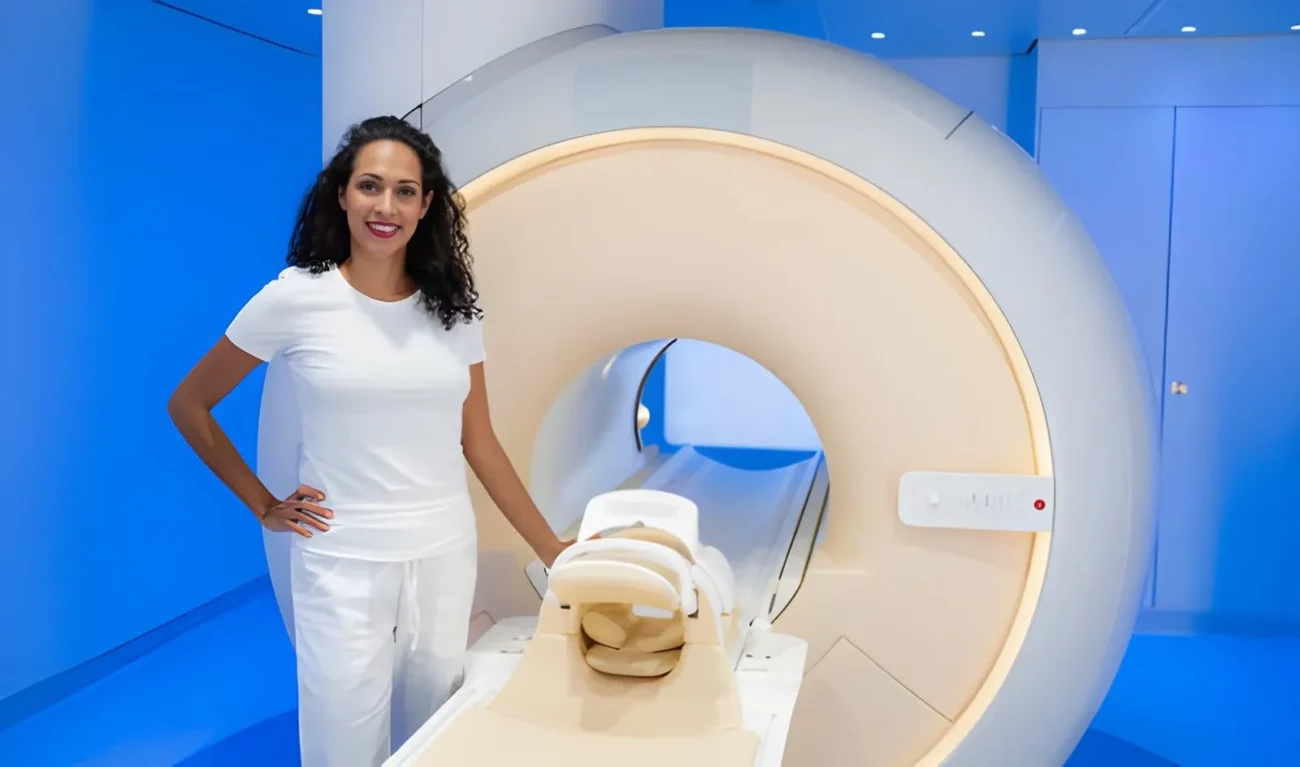
Kasey McKillip has worked as an MRI technologist for more than a decade, in a field where consistency supports work that depends on precise preparation and repeatable processes. MRI exams vary by anatomy, clinical question, patient condition, equipment, and site protocol, so consistency does not mean treating every situation identically. It means carrying out essential steps reliably while recognizing when an exam requires an approved adjustment or additional review.
In a high-precision imaging environment, small differences can accumulate. An incomplete screening step, a positioning change, an overlooked protocol update, or inconsistent documentation can affect what happens later in the exam. Standardized processes help imaging teams control the parts of the workflow that should be repeatable, leaving professional attention available for the parts that genuinely vary.
Consistency starts before image acquisition
Every step in an MRI requires attention to detail. Patient identification, screening, exam verification, room preparation, coil selection, positioning, and communication all happen upstream of the images. These tasks can feel routine because they occur repeatedly, but repetition is exactly why a dependable process matters.
The American College of Radiology’s current MR safety resources identify its 2026 Manual on MR Safety as the newest edition. ACR guidance emphasizes structured safety practices for the MR environment, including screening, controlled access, personnel responsibilities, implants and devices, emergency considerations, and the physical hazards associated with magnetic resonance systems. The details may differ by facility, but the broader lesson is clear: critical safety work should not depend on memory alone or on how familiar a patient or exam appears.
Consistency is especially important when workload changes. A quiet schedule and a busy schedule should not produce different standards for core checks. Standardized forms, access controls, written policies, and defined escalation paths create a framework that remains available when staff are interrupted, when an unfamiliar device is reported, or when an exam does not follow the usual pattern.
That framework also protects against a common problem in experienced work: familiarity can make a repeated task feel automatic. A checklist or standardized screening process is useful precisely because it asks the professional to confirm the required information again rather than assume that a familiar-looking situation is unchanged.
Positioning is repeatable, but patients are not
Positioning shows why consistency does not mean doing everything exactly the same way for every exam. Technologists can follow a dependable approach to coil placement, centering, alignment, and other setup steps while still accounting for the individual patient. Starting from a familiar process helps limit unnecessary variation and gives the technologist a reliable framework for the exam.
Some patients need adjustments because of discomfort, limited mobility, previous surgery, anxiety, injury, or difficulty remaining still. Consistency means having an established approach while allowing appropriate modifications when the patient or exam requires them. The goal is not identical positioning in every situation, but a reliable process that can accommodate legitimate differences within approved practice.
The technologist’s task is not to force every patient into an identical position. It is to understand which elements of the setup are essential, which can be adapted, and when a change needs consultation or a protocol decision from the appropriate clinical authority. That is a more demanding form of consistency than simply repeating a physical routine.
Clear documentation supports those adaptations. When a setup or workflow differs for a legitimate reason, recording relevant information through the facility’s approved process helps other members of the imaging team understand what occurred without relying on recollection or informal explanation.
Protocols turn technical choices into a shared process
MRI systems offer many adjustable parameters, and modern platforms may add automated tools, reconstruction options, acceleration methods, and vendor-specific features. Protocols organize those possibilities into an approved approach for a particular examination. They help prevent every technologist from rebuilding the exam independently at the console.
A protocol does not eliminate the need for judgment. A patient may not tolerate the expected position, motion may require a response, or the clinical situation may call for a change authorized through the department’s normal process. The value of protocol consistency is that deviations begin from a known standard. The team can identify what changed instead of trying to determine which version of the exam was used in the first place.
Protocol control becomes especially important when equipment or software changes. A department that updates a scanner needs a deliberate method for reviewing, testing, approving, and communicating protocol revisions. If individual staff members quietly modify settings and save personal versions, variation can spread without a clear record of why it happened.
Shared naming conventions and current reference material can reduce that problem. Technologists should be able to identify the approved protocol and know where to find the latest instructions. A process that exists only in one person’s memory is difficult to reproduce across shifts, new hires, or equipment transitions.
Quality control depends on repeatable measurements
Consistency is also built into the technical oversight of MRI equipment. The ACR MRI accreditation program requires ongoing quality-control activity and documentation. Its quality-control guidance calls for preventive maintenance by qualified service engineers and retention of service reports, while the MRI Quality Control Manual describes a structured program for evaluating equipment performance.
These activities are useful because equipment performance cannot be judged reliably from occasional impressions. Repeated measurements performed in a defined way allow a facility to recognize trends and identify results that fall outside established criteria. If the test method changes unpredictably from one check to the next, the comparison becomes less meaningful.
Technologists encounter the same principle in daily work. A single unusual image may have several possible explanations. When setup, protocols, and routine quality processes are reasonably consistent, the team has fewer uncontrolled variables to sort through while troubleshooting.
Quality control is not a promise that every exam will look identical. Patient anatomy and clinical circumstances ensure that they will not. The purpose is to keep equipment and process variation from adding avoidable uncertainty to an already variable clinical environment.
Documentation keeps one shift connected to the next
MRI departments are continuous operations that don’t close for the night, with work passing among technologists, radiologists, nurses, or other clinical staff where applicable, schedulers, service personnel, and leadership. Documentation allows information to move with the work instead of remaining attached to the person who happened to be present.
In documentation, consistency starts with using the designated system and agreed terminology. If one technologist records a technical issue in the service log, another mentions it only verbally, and a third keeps a private note, the department does not have one reliable history. The same problem can occur with protocol changes, equipment concerns, or workflow instructions.
A standardized record makes patterns easier to see. A problem that appears isolated on one shift may be recurring across several days. Consistent entries can give service staff or department leadership enough context to investigate without reconstructing events from memory.
Documentation also matters during equipment maintenance. ACR accreditation support materials state that sites should maintain preventive-maintenance documentation and service records. That record creates continuity between routine imaging operations and the technical work required to keep the system functioning as intended.
Standardization reduces avoidable cognitive load
High-precision work requires attention, and attention is limited. When routine tasks are organized consistently, staff do not have to reinvent basic decisions each time. A predictable room setup, known storage location, current protocol library, standardized screening sequence, and clear documentation path reduce the number of small choices competing for attention.
This does not make MRI work mechanical. It does the opposite: it preserves mental capacity for the situations that are not routine. An unexpected screening response, a patient who cannot tolerate the planned setup, an equipment message, or an unusual workflow problem deserves more thought than finding out where a required accessory was placed.
Human-factors research in healthcare has long supported the use of standardization and checklists for reducing reliance on memory in complex systems. The World Health Organization’s surgical safety work is not an MRI protocol, but its checklist guidance illustrates the broader safety principle that teams can formalize critical checks rather than assume experienced professionals will always remember every step under every condition.
In MRI, local procedures must still be designed for the actual environment and responsibilities of the imaging team. Borrowing a generic checklist without validating it for the facility would miss the point. The useful principle is to make critical, repeatable work visible and dependable.
Consistency requires updates when the standard changes
A standardized process can become a problem if it remains unchanged after the evidence, equipment, or guidance has moved on. Kasey McKillip highlights that consistency and current information are vital. Departments, therefore, need a controlled way to revise policies, protocols, forms, and training materials.
The release of ACR’s 2026 Manual on MR Safety is a practical example. A facility using older guidance should not preserve an outdated process merely because staff perform it consistently. Current recommendations need to be reviewed by the appropriate leadership and translated into local policy where applicable.
Updates also have to reach the people doing the work. Changing a document on a shared drive is not enough if staff continue using a printed copy at the scanner or an older saved protocol. Version control, communication, education, and removal of obsolete materials are all part of maintaining consistency after a change.
Technologists contribute by noticing mismatches. When written instructions, scanner settings, or daily practice no longer agree, the discrepancy should be resolved through the department’s established process rather than normalized as another local workaround.
Precision comes from dependable processes
A high-precision imaging environment cannot remove every possible variable. Patients differ, clinical questions differ, and technology continues to change. The parts that can be controlled, however, should not drift simply because a department is busy or a task has become familiar.
Consistency gives MRI teams a stable foundation: screening is approached systematically, positioning begins from a reproducible method, approved protocols are identifiable, quality checks are documented, and workflow changes are communicated. Within that structure, technologists can respond to the individual exam without losing sight of the processes that protect safety and technical reliability.
The result is not sameness for its own sake. It is a working environment in which variation is more likely to be intentional, visible, and explainable—an important distinction whenever precision depends on many people carrying out connected tasks.