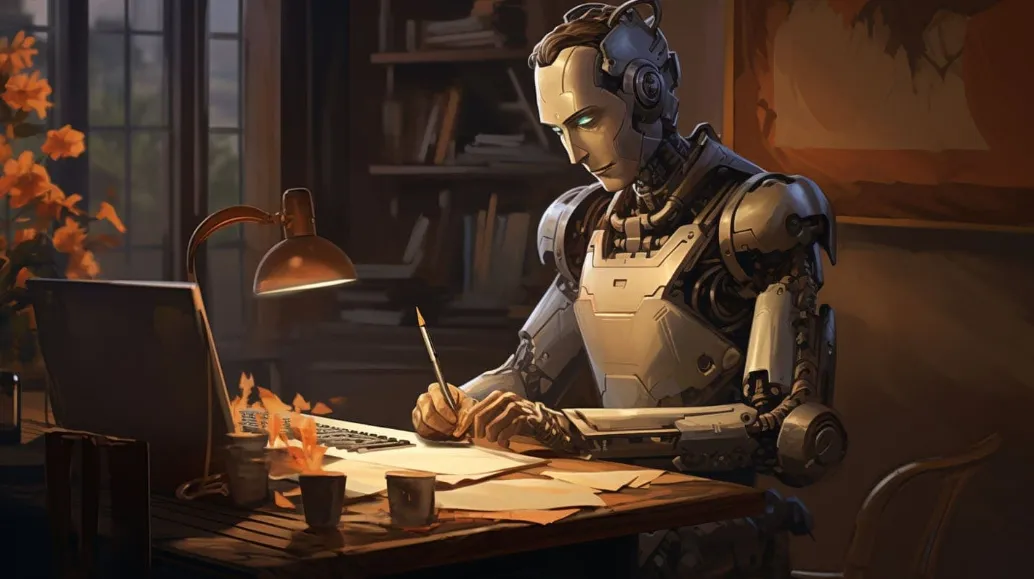
It’s 10:47 p.m. The day job is finally finished. The kids are asleep. You have maybe forty-five minutes before you’ll be useless. The chapter you meant to draft yesterday is still sitting there, blinking. If any of this is familiar, an AI story generator used the right way can be the difference between a productive half-hour and another night where the manuscript doesn’t move.
Busy writers are not less serious writers. They are writers operating under real constraints. A thoughtful AI fiction tool is one of the few things in 2026 that can actually expand the productive surface of a tight schedule without compromising the work. This isn’t about cutting corners. It’s about removing friction from the parts of the process that swallow the most time.
This piece is for the writers who are doing this work in the margins of an already-full life, and who deserve every honest tool that can help.
Who This Is For
Before going further, worth naming who this piece is meant for.
- The writer holding a full-time job while drafting her first novel
- The parent of young children writing during nap times and early mornings
- The caregiver fitting writing around someone else’s care needs
- The writer with a chronic condition that limits her daily working hours
- The writer juggling multiple income streams who only gets to fiction on the side
If you are any of these writers, the benefits below are specifically for you.
Benefit 1: Cutting Decision Fatigue
The hardest part of writing in a small window of time is not the writing. It is the deciding.
Where should this scene start? Who speaks first? What’s the location? What’s the weather? What are they wearing? What’s the smell of the room?
Every decision drains the limited mental energy you brought to the session. By the time you’re ready to write, the energy is gone.
AI tools cut decision fatigue at the source. Ask for ten possible opening locations. Pick one in thirty seconds. Move on.
The decision is still yours. The agonizing is gone.
Benefit 2: Reducing Re-Entry Time
Busy writers often go days between sessions. Re-entering the work is a real cost.
You have to reread what you wrote. Remember where the plot was going. Reconnect with the voice. By the time you’re back in, the session is half over.
AI tools can dramatically reduce re-entry time. Ask the AI to summarize what you wrote in your last session and what was about to happen next. Five sentences. Ninety seconds. You’re oriented.
This single benefit might be the most valuable for writers with sporadic schedules.
Benefit 3: Removing the Worst Tedium
Some writing tasks are not creative. They are just tedious.
- Drafting a synopsis
- Writing a query letter
- Composing a newsletter
- Creating social media copy
- Producing blurb variations for testing
For a busy writer, every minute spent on these tasks is a minute not spent on the actual book.
AI tools handle these tasks well. Not perfectly, but well enough that the writer can spend two minutes editing rather than two hours drafting from scratch.
The reclaimed time goes directly into the manuscript.
Benefit 4: Providing Always-Available Collaboration
A busy writer rarely has access to writing groups. Schedules don’t align. Childcare gets in the way. Energy runs out before the meetings start.
AI tools fill some of the same role. Not the social warmth of human friendship. The intellectual function of having someone to think out loud with.
At 10:47 p.m., when no other writer in your life is awake or available, the AI is there. That availability matters more than the casual writer realizes.
Benefit 5: Holding Continuity for You
Tracking continuity across a novel is hard enough. Tracking it across a series while writing in small windows is nearly impossible without help.
What color were her eyes again? Did they ever mention his sister by name? What was the name of the diner? When did the scar happen?
AI tools can hold this kind of detail and surface it on demand. The mental load drops dramatically.
For a busy writer, lighter mental load means more energy available for the actual creative work.
Benefit 6: Compressing Research
Romance often requires specific research. Period details for historicals. Professional accuracy for workplace romance. Setting authenticity for travel romance.
Deep research is one of the easiest things for a busy schedule to swallow. Hours disappear into reference materials. The novel doesn’t move.
AI tools compress research significantly. The first pass of basic facts comes in seconds. The writer can then verify the critical details rather than starting from scratch.
The novel moves faster. The research is still done.
Benefit 7: Making Revision Possible
Revision is where most busy writers’ projects stall.
The draft is finished, but the revision feels overwhelming. Where to start? What to cut? What to add? The mountain looks too big for the available time.
AI tools break revision into manageable passes. Run a pacing pass tonight. Run a character consistency pass tomorrow. Run a dialogue pass on Friday.
Each pass takes a single session. The cumulative effect is a revised manuscript that would have taken months without the structure.
Benefit 8: Sustaining Momentum Between Sessions
The cruelest thing about writing in margins is how easily projects die.
You write for two weeks. Life intervenes. You return three weeks later. The project feels alien. You abandon it.
AI tools can keep a project alive during gaps. Quick conversations with the AI about where the story is going. Brief brainstorming sessions even when actual writing isn’t possible. The relationship with the manuscript stays warm.
When you return to the page, the project is still alive.
Benefit 9: Building Craft Even on Low-Energy Days
Some days, drafting is impossible. The energy is gone.
On those days, AI tools can still support craft work. Reading and analyzing your own earlier chapters. Studying the structure of comparable books. Exploring character backstory.
The session doesn’t add words. It deepens the work. For a busy writer, every session that contributes to the project counts.
Benefit 10: Lowering the Emotional Cost of Stuck Days
Most damaging of all: the emotional cost of unproductive sessions.
A busy writer who sits down for her one available hour and produces nothing carries that failure into the next day. The frustration compounds. Eventually, she stops trying.
AI tools lower this emotional cost. Even a stuck session can produce useful brainstorming, useful audits, useful planning. The session feels like progress because it is progress.
Less guilt. More returns to the desk.
A Specific Routine for the Busiest Weeks
For weeks when life is genuinely overwhelming, try this minimal routine:
- Three sessions per week. Twenty minutes each. Non-negotiable.
- Session one: Pure ideation with AI. No drafting. Capture three usable ideas.
- Session two: Pure drafting. No AI. Use one of the ideas from session one.
- Session three: AI-assisted revision of what you drafted. Twenty minutes.
Sixty minutes a week. Over a year, this routine produces a complete novel.
What This All Adds Up To
The cumulative effect of these benefits is significant.
Busy writers using AI tools well are finishing books that previously would have been abandoned. They are sustaining careers that previously would have collapsed under the weight of competing demands. They are doing the work that matters to them in the time they actually have.
That is the real benefit. Not faster books. Sustained creative lives.
A Few Words on Energy Management
Time is one constraint busy writers face. Energy is the other, and often the harder one to manage.
A few small practices that pair well with AI tools:
- Identify your one best hour of the day and protect it ruthlessly. Use it for drafting, not for AI prompts.
- Use AI-assisted brainstorming during low-energy moments. Brainstorming is less depleting than drafting.
- Batch similar tasks. Marketing in one session. Drafting in another. Revision in a third.
- Accept variable output. Some weeks you’ll write a chapter. Some weeks you won’t. Sustaining the practice is what matters over months.
These practices, combined with AI tool support, are how busy writers actually finish books.
A Closing Note on Self-Compassion
Busy writers often carry an unspoken shame about how slowly the work moves.
That shame is misplaced. Writing a novel while running a life is one of the harder things a person can attempt. Tools that make it more sustainable are not shortcuts. They are accommodations to reality.
Use them without apology.
For more thoughtful conversation about craft, creative life, and how working artists sustain themselves over the long haul, back to fronts how is worth adding to your regular listening. It’s the kind of further reading that helps a busy writer remember why she started, which is the part of the job that no tool can replace.